Aggregate Production Plants — From Quarry Face to Finished Stone
Turnkey crushing, screening and washing lines from 50 t/h to 1,000 t/h. Built around your rock, your spec, your site.
XLM in the Aggregate Industry
500+
Aggregate plants delivered worldwide
100+
Countries served on six continents
50 – 1,000 t/h
Capacity range we engineer
22
Years focused on crushing & screening
What "Aggregate Production" Actually Covers
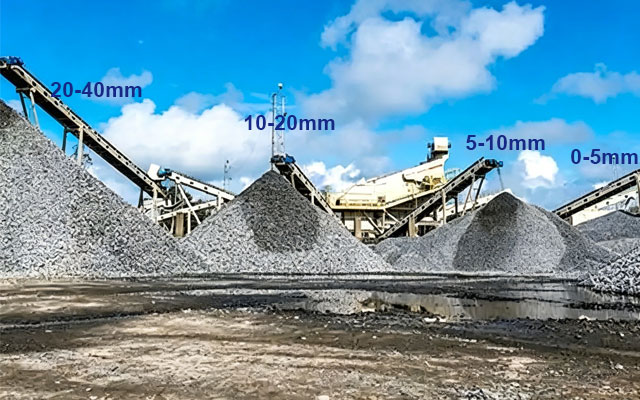
Aggregate is the unglamorous backbone of every road, every bridge, every concrete pour. The industry sounds simple — crush rock, sort by size, ship it out — but in practice every project lives or dies on three questions: what's your feed material, what gradation does your buyer pay for, and how many tonnes per hour do you need to hit before the loader starts idling?
XLM builds production lines for the full aggregate value chain:
Crushed stone for ready-mix concrete and asphalt — 5/10, 10/20, 20/40 mm chips, cubical shape, low flakiness.
Manufactured sand (M-sand) for concrete and mortar — 0–4.75 mm, FM 2.3–3.0, replacing depleted river sand.
Base course and sub-base for highways and railways — 0–32 mm graded mixes meeting AASHTO and EN standards.
Railway ballast — 22.4/63 mm angular stone, abrasion-tested.
Quarry products for cement raw mix — sized limestone feeding cement kilns at 500–2,000 t/h. If your project lands in any of these buckets, the next three sections walk you through how we'd configure the line.
Who buys from us in this industry
Quarry operators · Ready-mix concrete groups · Highway and railway contractors · Cement majors · Government infrastructure projects · Aggregate trading companies.
Choose Your Production Line by Capacity
Three field-proven configurations. Each one is a starting point — we'll fine-tune it for your rock type and finished sizes.

Compact Line · 50 – 150 t/h
For regional quarries, small contractors, and pilot projects.
A single-stage or two-stage layout for soft to medium-hard rock. Footprint stays small — typically 30 × 60 m including stockpile area — and the line ships from one or two 40-ft containers. Power draw 200–350 kW. Payback usually under 18 months at regional aggregate prices.
Core equipment:
Standard Line · 200 – 400 t/h
The workhorse configuration. 80% of our aggregate orders land here.
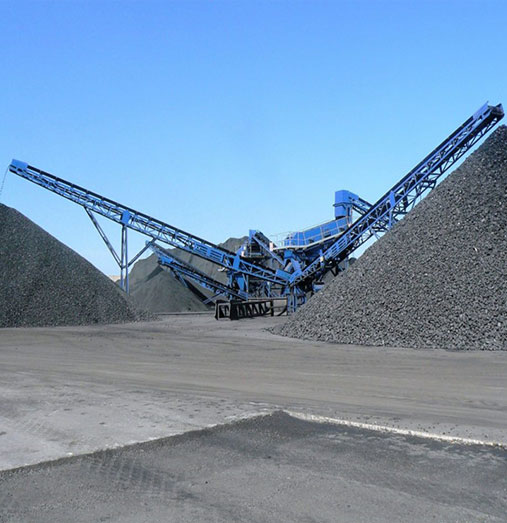
Three-stage layout with separate sand-making circuit. Handles granite, basalt, river pebble and other hard rocks at Mohs 6– 7. Produces 4–5 saleable gradations from a single line, including 0–5 mm manufactured sand. Power 600–900 kW. Plot area 80 × 120m.
Core equipment:

Heavy-Duty Line · 500 – 1,000 t/h
For trunk highways, mega cement quarries, and national infrastructure programs.
Four-stage flowsheet with redundant primary capacity, long-belt linkages and PLC central control. We typically deploy Euro-type jaws for tougher feed sizes and parallel cone-crusher trains for uptime. Power 1.5–2.5 MW. Engineered for 7,000+ operating hours per year.
Core equipment:
HP Multi-cyl Hydraulic Cone Crusher(parallel)
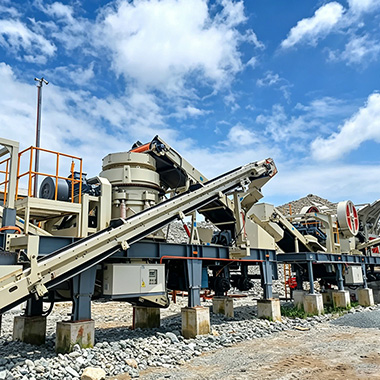
Mobile Stone Crushing Plant
Flexible Crushing Solutions for Modern Mining and Quarry Operations

The tire-type mobile crusher plant is semi-mobile and needs to be towed by a semi-trailer when traveling. It is mostly used for construction waste disposal, earthworks, and construction.
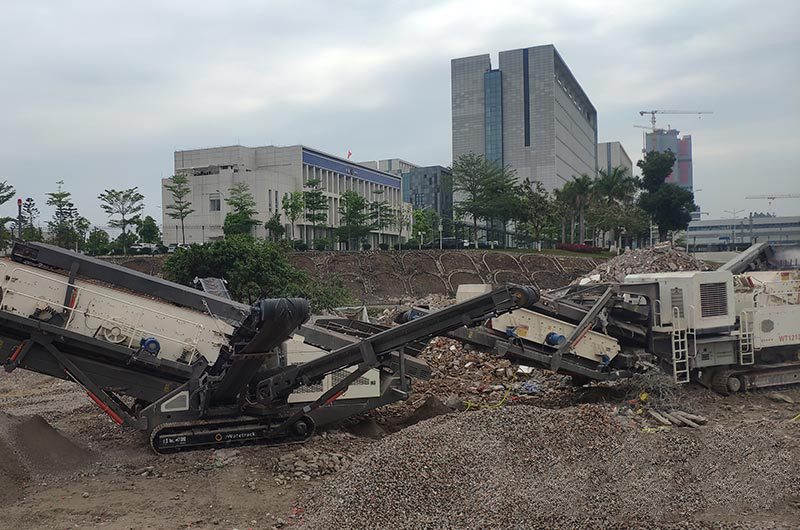
The crawler-type mobile crushing plant can be moved by itself and operated by wireless remote control. It is mostly used in mountainous areas, wetlands and harsh mining environments.
Match Your Process to Your Rock
Same capacity, different rock — different machines. Here's the cheat sheet our engineers use
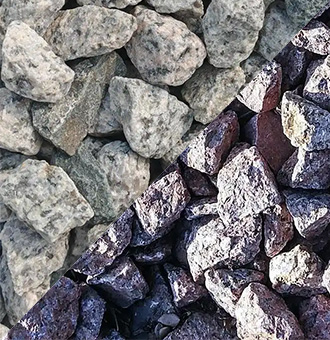
Hardnes S (Mohs) : 6 - 7
Recommended crushing line : Jaw + HP Cone + VSI
Bestfor output : Cubic aggregate, M-sand
Notes : High abrasion. Wear cost is thedominant OPEX- use chrome- alloyliners.

A Standard Aggregate Production Flowsheet

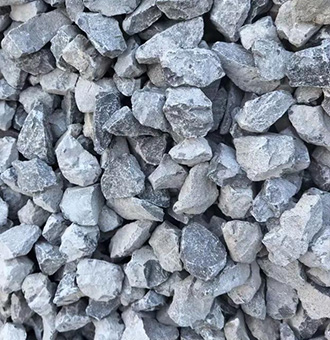
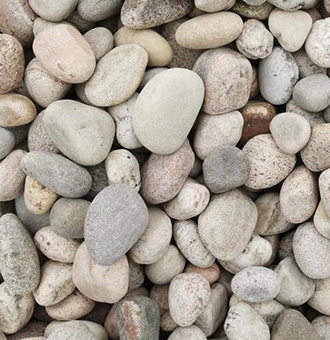
Every aggregate plant we deliver follows the same five-step logic, scaled up or down to match capacity. Primary crushing at the pit face turns blast-pile feed (up to 1,200 mm) into 100–300 mm fragments. Secondary crushing brings the product down to 30–80 mm — this is where cone crushers earn their keep on hard rock. Tertiary crushing or sand making delivers the final saleable sizes including 0–5 mm manufactured sand. Multi-deck screening sorts the output into commercial gradations. Washing removes clay and fines when the buyer pays for cleanliness — typically for concrete-grade products. Conveyors, dust suppression and central control tie it all together.
Equipment We Build Aggregate Plants Around
Every machine below has been engineered, deployed and field-validated in real aggregate operations
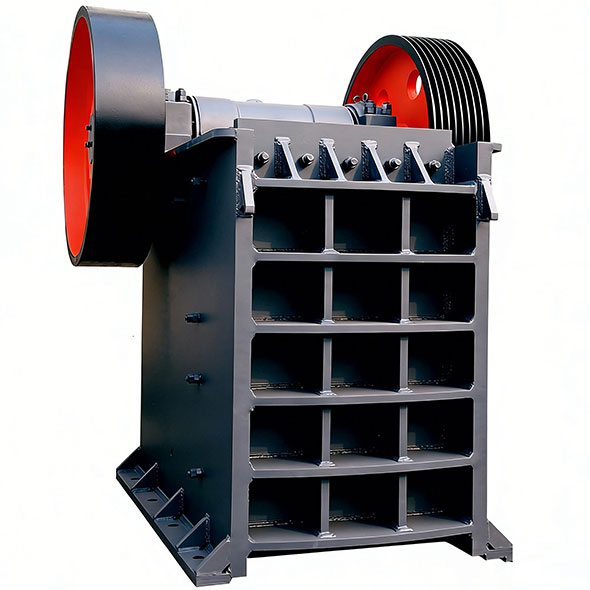

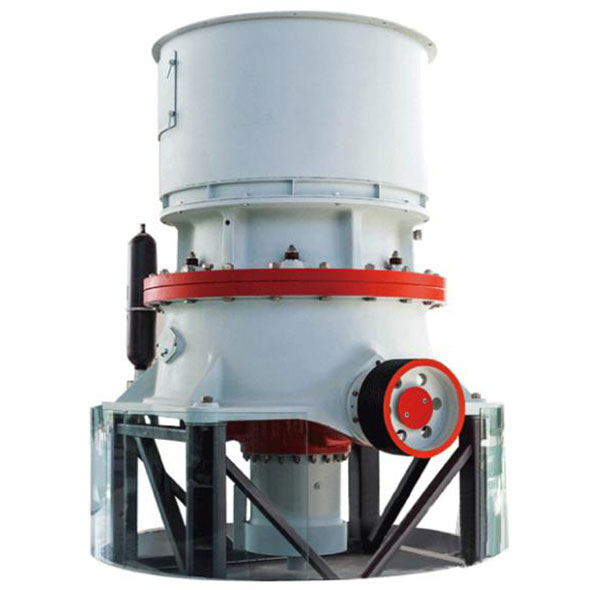
Premium primary for high-capacity quarry lines. Heavier frame, longer liner life.
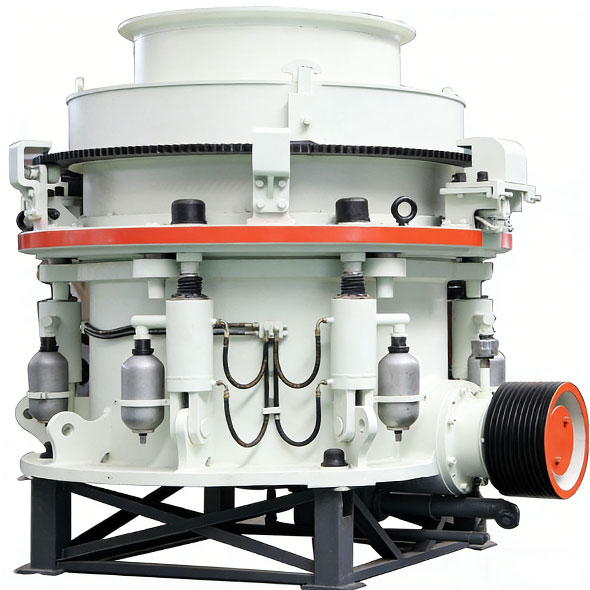
HP Hydraulic Cone Crusher
Secondary/tertiary workhorse for granite, basalt, river pebble. 90–1,200 t/h.


Circular Vibrating Screen
Multi-deck screening, the most common workhorse on every line.
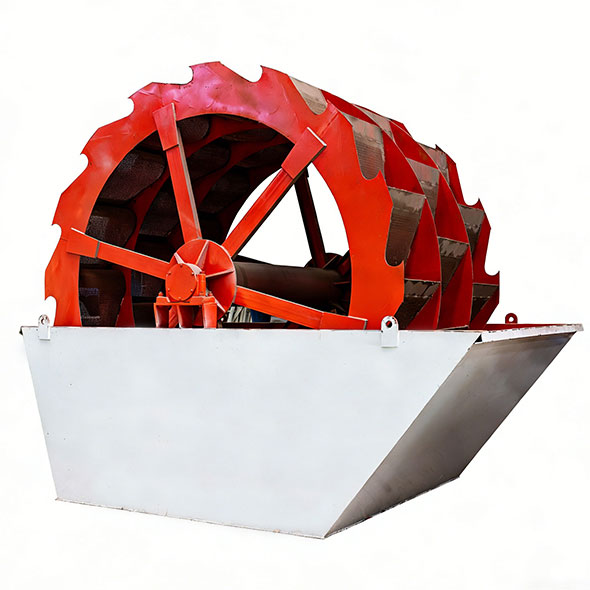
On-demand mobile crushing for rugged field deployment120–625 t/hDiesel / Electric
Aggregate Plants We've Delivered
Project snapshots from quarries in Africa, Latin America and Asia.

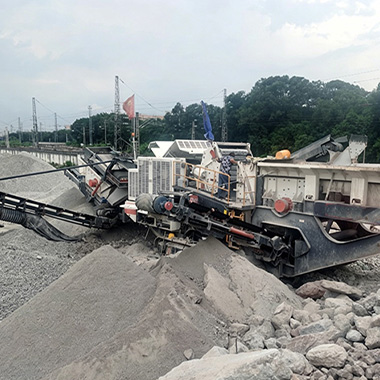
Material: Granite (180–220 MPa)
Capacity: 250 t/h
End-use: Highveld road construction
A mobile-mounted three-stage solution for a contractor needing to follow a stretched roadworks corridor — set up and producing within 5 days of site delivery.
Material: Limestone (Mohs 3–4)
Capacity: 350 t/h
Climate: Wet-season operation Oct–Mar
Single-machine solution for a brownfield limestone pit, engineered for monsoon-season operation with reinforced under-belly drainage and sealed electrics.
Material: River gravel, high clay content
Capacity: 300 t/h
Constraint: Seasonal river, water-scarcity regulation
Closed-loop water recycling design — 85% of process water recovered — to comply with regional discharge limits while still producing concrete-grade sand.
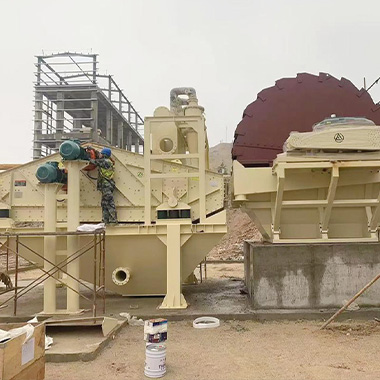
Material: River sand, 20% fines
Capacity: 60 t/h
Output: Construction-grade washed sand
Add-on washing module retrofitted into an existing aggregate facility — fines recovery boosted saleable yield by 18%.
From First Call to First Tonne — How We Deliver
Aggregate Production — Questions Buyers Always Ask
A: Equipment-only budget for a standard granite line at 200 t/h is typically USD 350,000 – 650,000 depending on the number of
finished sizes, whether sand-making is included, and the level of automation. Add 15–25% for shipping, civil works and
installation. Send us your raw-material report and we'll return a line-item quote within 5 days.
A: It comes down to your rock. For hard, abrasive feed (granite, basalt, river pebble at Mohs 6+) use a cone crusher — wear cost
on an impact crusher would eat your margin in three months. For soft, low-abrasion rock like limestone, an impact crusher
delivers better cubicity at a much lower CAPEX and gives you better-looking aggregate for the concrete market.
A: Yes. We offer wheel-mounted and track-mounted units for contractors who move between sites, and skid-modular layouts
for clients who want fast relocation without containerised mobility.
A: We stock common wear parts (jaw plates, cone mantles & concaves, impact bars, screen meshes) in our works and ship
within 7 days of order. For projects above 200 t/h we recommend a 12-month wear-parts package shipped together with the
line so you don't lose uptime waiting for international logistics.
A: For standard configurations, 3–4 months from contract signing to shipment, plus 30–60 days for sea freight and 4–6 weeks
for on-site installation and commissioning. Total project timeline is typically 6–8 months for a 200–400 t/h line, longer for mega
projects.
A: We've delivered into jurisdictions with stringent dust, noise and process-water discharge limits — including the EU,
California, Australia and parts of Southeast Asia. Closed-circuit water recycling, fully enclosed transfer points and bag-house
dust collection can be integrated from day one. Tell us which regulation applies (e.g. EU BREF, US EPA NSPS Subpart OOO) and
we'll design to it.
Ready to Spec Your Aggregate Plant?
Tell us your rock, capacity and finished sizes — we'll come back with a flowsheet, equipment list and budgetary quotation within 5 working days.