
Industrial Mineral Grinding Plants — From Limestone Lump to 600-Mesh Powder
Turnkey Raymond mill production lines for calcium carbonate, barite, talc, kaolin, gypsum and bentonite. Mesh 80 to 600. Whiteness up to 96.
Two Decades Grinding Non-Metallic Minerals
Industrial minerals — calcium carbonate, barite, talc, kaolin, gypsum, bentonite, dolomite, mica — feed seven downstream industries that together represent more than USD 60 billion in annual global trade. Paint, paper, plastic, rubber, drilling fluid, ceramic glaze, food-grade filler: every formulation specifies the mineral powder by mesh, whiteness, oil absorption and moisture. Get any one of those four numbers wrong and the powder is unsellable into its target market. XLM has built grinding plants for clients producing exactly that specification of powder, in 30+ countries.
200+
Mineral grinding plants delivered
80 – 600
Mesh range produced
96
Maximum whiteness achieved (calcium carbonate, Ca content > 98%)
30+
Countries with active XLM grinding plants
The Eight Minerals That Move the Industrial-Powder Market
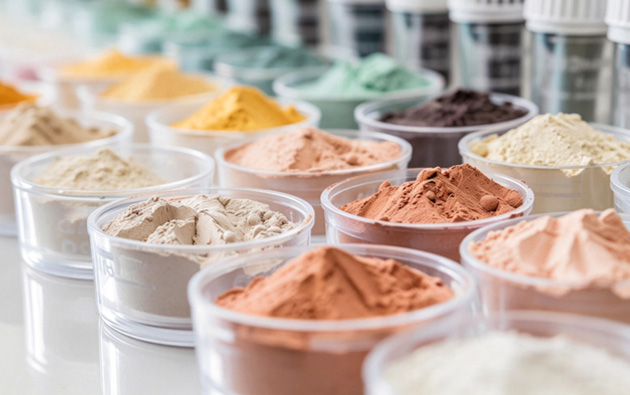
Unlike metal-ore mining (where the goal is concentrate for smelting) or aggregate production (where the product is crushed stone for construction), the industrial-minerals business is about producing a precisely specified powder for a downstream formulation buyer. The mineral itself is not the product — the powder spec is.
The eight materials XLM grinds for most often:
Calcium Carbonate (CaCO₃) — the workhorse, used in paint, paper, plastic, rubber, sealants, food, and pharmaceuticals. Mesh 200–2500. Whiteness premium above 94.
Barite (BaSO₄) — oil & gas drilling fluid (API spec, > 4.2 g/cm³), and as a paint/plastic filler. Mesh 200–325 is the API window.
Talc — paint, paper, plastics (especially PP), cosmetics. Mesh 200–1250. Low oil absorption is the buying criterion.
Kaolin (china clay) — paper coating, ceramics, paint, rubber. Mesh 325–1250, low Fe₂O₃ for whiteness.
Gypsum — building plaster, cement retarder, agricultural soil treatment. Mesh 80–200.
Bentonite — drilling fluid, cat litter, iron-ore pelletisation, foundry. Mesh 200–325.
Dolomite — glass, refractories, agricultural lime. Mesh 80–325.
Mica — plastics, paint, cosmetics. Mesh 200–600.
If your project lands on any of these — or any other Mohs-hardness-below-7, dry-grindable non-metallic mineral — the next sections walk you through how we'd configure the line.
Choose Your Production Line by Capacity
Three field-proven configurations. Each one is a starting point — we'll fine-tune it for your rock type and finished sizes.
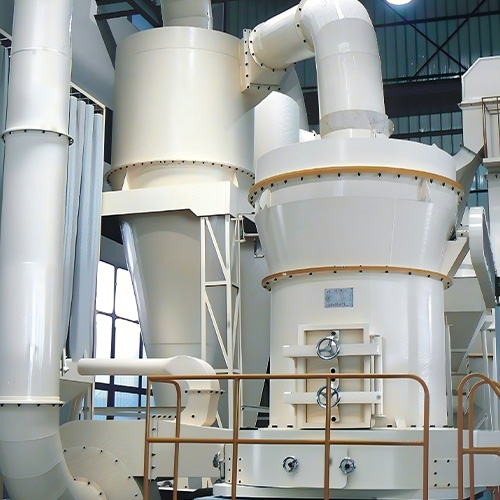
Coarse Industrial Powder · 80 – 200 Mesh
For agricultural lime, building plaster, cement additive, glass batch.
Single-pass Raymond mill, no air classifier required. Production rate 3–22 t/h depending on mill size and feed material. Power 75–280 kW. Smallest footprint of the three configurations — 400–600 m² including silo and packaging.
Core equipment:
cyclone collector
pulse-jet bag filter
packaging
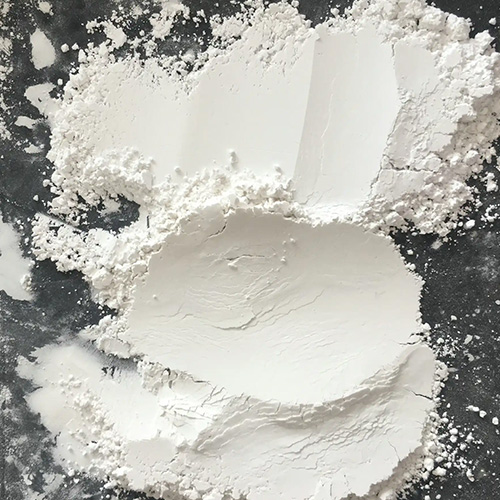
Mid-Fine Powder · 200 – 425 Mesh
The sweet spot. 70% of our industrial-mineral orders land here.
Raymond mill with built-in dynamic classifier — adjustable to the target mesh from the operator console. Production 1.5–18 t/h. Includes secondary classification for tight particle-size distribution (PSD), critical for API-spec barite or paint-grade CaCO₃.
Core equipment:
Raymond Mill MTW140 / MTW180 with dynamic classifier
cyclone + bag filter
silo
automated packaging

Ultra-Fine Powder · 425 – 2500 Mesh
or premium paint, paper coating, plastic masterbatch, pharmaceutical filler.
Raymond mill paired with a secondary multi-wheel air classifier — or dedicated ball mill + classifier for the finest grades. Production 0.5–8 t/h at the fine end. Whiteness preservation and PSD control become the dominant engineering challenges, not throughput.
Core equipment:
multi-wheel air classifier
classifier stack + ceramic-lined wear surfaces (whiteness preservation)
Six Mineral-Specific Configurations
Same mesh target, different mineral — different mill setup. Here are the six configurations we deploy most often.
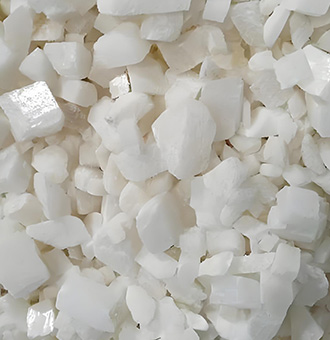
Calcium Carbonate (CaCO₃) — The Universal Filler
Mohs 3, soft and grindable. Standard target: 325 mesh, whiteness ≥ 94 for paint/plastic grade. Mill liners specified in ceramic or chrome-alloy to prevent metallic contamination dropping whiteness.
Typical process :
Calcite lump → PE Jaw Crusher → Raymond Mill MTW175 → classifier → product silo
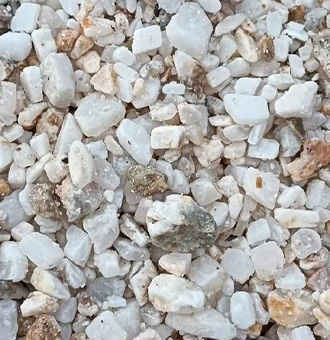
Barite — For Oil & Gas Drilling Mud
API 13A specifies min 95% passing 200 mesh, max 30% passing 325 mesh, density ≥ 4.2 g/cm³. Tight PSD control is everything — over-grinding rejects the powder. Mill speed and classifier RPM are tuned narrowly.
Typical process :
Barite ore → jaw → Raymond mill with online density check → bag-house collector → drilling-mud packaging (25 kg or jumbo bag)

Talc — Low Oil Absorption for Paint & PP
Mohs 1, softest material we grind regularly. Standard mesh 325–1250 depending on downstream use. The challenge isn't grinding — it's avoiding lamellar damage that destroys talc's plate structure (and its market value).
Typical process :
Talc lump → low-speed jaw → Raymond Mill at reduced RPM → multi-wheel classifier (preserves plate structure) → packaging

Kaolin — For Paper Coating & Ceramics
Whiteness is everything. Iron contamination from steel mill internals will visibly yellow the product. Ceramic-lined classifier and pulse-jet baghouse on mandatory spec.
Typical process :
Kaolin → washing (clay separation, optional) → drying → Raymond Mill with ceramic wear lining → fine classifier (target 1250–2500 mesh)
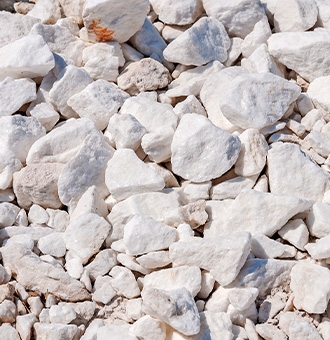
Gypsum — For Plaster & Cement
Mohs 1.5–2. Often dehydrated before/during grinding for plaster-grade product. Mesh 80–200 standard. Integrated calcination is optional.
Typical process :
Gypsum lump → jaw → optional calciner → Raymond Mill (80–200 mesh) → packaging

Bentonite — For Drilling Mud, Foundry & Cat Litter
Pre-dried to below 12% moisture before grinding. Mesh 200–325. Sodium-activation can be integrated upstream of the mill for Na-bentonite product spec.
Typical process :
Bentonite ore → drying drum → (optional Na-activation) → Raymond Mill → classifier → bagged product
A Complete Powder Production Line — End to End

An industrial-minerals plant looks very different from an aggregate or mining plant. There is only one crushing stage (jaw, to break lump material into mill feed), but the downstream — grinding, classification, dust collection, silo storage, and automated packaging — accounts for two-thirds of the plant capex and almost all of the operational complexity.
The Raymond mill sits at the heart of the line. Material is conveyed into the grinding chamber where 3–5 spring-loaded rollers crush it against a rotating ring. The pulverised material is lifted by an internal air stream up to a built-in classifier, which sends on-spec fines forward to the cyclone and rejects oversize back to the grinding chamber. A pulse-jet baghouse downstream recovers the finest residual particles — both as product yield and as environmental compliance.
Three points where most plants lose value, and how we address them: ① Classifier wear → ceramic-lined rotor for whiteness-sensitive materials ② Baghouse leakage → cartridge filters at the venting outlet, < 30 mg/Nm³ emissions ③ Silo discharge bridging → fluidising aeration pads on cone bottom, no manual unblocking
Raymond Mill (MTW Series) — Sizing Guide
Standard configurations. Throughput shown for limestone (Mohs 3) at 325 mesh, 95% passing target.
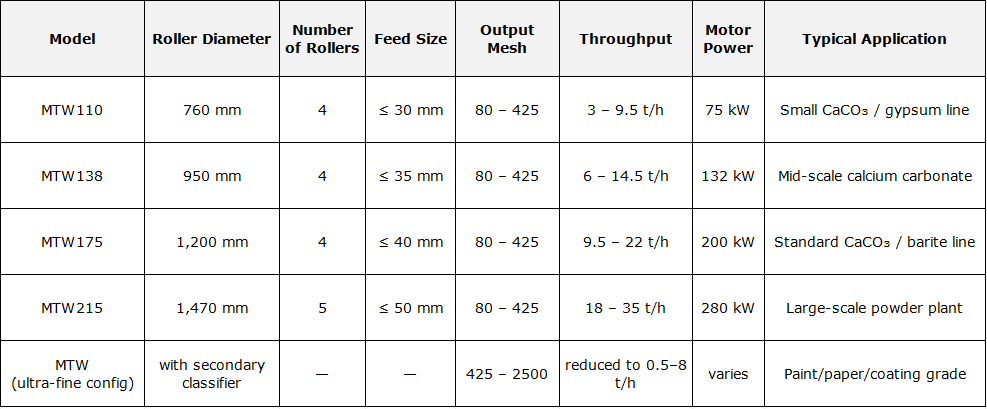
Need finer than 2500 mesh, or higher whiteness than standard Raymond can deliver? We engineer vertical roller mills (LM series) and wet ball mills with ceramic media for premium ultra-fine and whitening applications.
Mesh, Whiteness, Moisture — The Three Numbers That Decide Your Sale Price
Most powder buyers will pay 20–40% more for material that sits at the top of all three. Here's how we engineer for it.
Particle Size Distribution
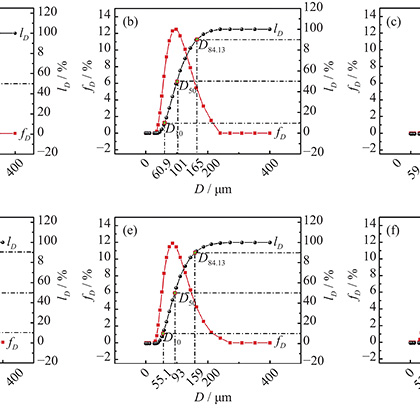
A "325 mesh" powder isn't really one size — it's a distribution. Tight PSD (D90 close to D50) commands premium pricing in paint, paper coating, and API barite. We engineer the classifier RPM and air-volume curves so D50, D90 and top-cut all land where the buyer specifies, batch after batch.
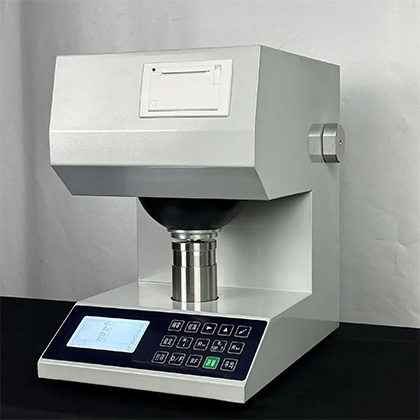
Whiteness (Brightness)
Whiteness loss happens at three points: iron pickup from steel mill internals, oil contamination from gearbox seals, and color streaking from baghouse dust drift. We solve each: ceramic-lined classifier wheels, isolated mill drive, dedicated dust-collection ducting per product line. Whiteness ≥ 96 is achievable on high-grade calcite without bleaching.

Moisture & Free Flow
Powder above 0.5% moisture cakes in silos, jams pneumatic conveyors, and fails downstream automated mixing. We integrate air-stream heating in the mill (60–110 °C inlet) to evaporate residual moisture during grinding — finished powder ships at < 0.3% moisture, guaranteed free-flow for 90 days bagged storage.
Industrial Mineral Grinding — Frequently Asked Questions
A: Standard Raymond mills (MTW series) operate efficiently in the 80–425 mesh range. For finer products — 600 mesh and above — we add a secondary multi-wheel air classifier downstream, which extends the production window to about 1,250 mesh. Beyond that, ball-mill + classifier or vertical roller-mill systems are required.
A: Mechanically yes — but commercially no. Whiteness-sensitive products (calcium carbonate, kaolin) cannot share equipment with iron-containing or coloured materials without extensive cleaning between campaigns. For multi-product plants we recommend dedicated grinding lines per mineral, or strict colour grouping (whites on one line, beiges on another, darks on a third).
A: A complete turnkey 10 t/h CaCO₃ line at 325 mesh — including primary jaw, MTW138 Raymond mill, classifier, cyclone, baghouse, silos, and automated packaging — runs USD 280,000 – 480,000 depending on automation level, whiteness specification, and packaging format. Send your mineral analysis and target spec for a precise quote.
A: Bentonite, gypsum, and any mineral with feed moisture above 6% should be pre-dried in a rotary drum dryer to below 4% moisture before entering the mill. Calcium carbonate, barite, talc and dry-quarried limestone usually ship to the mill at acceptable moisture and skip drying. We size and integrate the dryer when needed.
A: Pulse-jet baghouses with PTFE-coated filter media maintain stack emissions below 30 mg/Nm³ — well inside EU and Chinese national standards. For US EPA or California compliance we add cartridge polishing filters bringing emissions below 10 mg/Nm³. Energy and audit reports available on request.
A: For standard configurations: 3–4 months manufacturing, 30–60 days sea freight, 4–8 weeks installation and commissioning. Total 6–8 months for a 5–20 t/h line. Larger or ultra-fine plants run longer because of classifier lead times.
Ready to Spec Your Powder Line?
Tell us your mineral, target mesh, target whiteness, and throughput — and ideally send a 2–5 kg sample for lab grinding tests. We'll return a sized plant flowsheet, equipment list and quotation within 7 working days.