XLM Stone Crusher
    image English
    • image English
    • image Pусский
    • image Español
    • image العربية
    • image Français
    qr Code Url

    Scan qrcode to view mobile website

    Data is empty
    0
    Member Center
    Exit
    Home Blog Blog To Avoid Inefficient Investment: How to Perfectly Configure a High-Yield Manufactured Sand Making Production Line from Scratch?

    To Avoid Inefficient Investment: How to Perfectly Configure a High-Yield Manufactured Sand Making Production Line from Scratch?

    1.How Poor Particle Shape and High Stone Powder Content in Manufactured Sand Cost Investors Money ?

    Sand making production is far more than simply crushing stones. Issues such as a gap in the fineness modulus, excessive flaky and elongated particles, or the failure to effectively separate clay from stone powder can lead to rejection by downstream high-grade commercial concrete plants and high-speed rail projects. Consequently, production lines built at massive costs fail to achieve their designed returns.
    A flawless sand making production line requires precise calculation of the geological characteristics of the raw material, material flow rate, gradation continuity, and environmental protection metrics during the initial equipment selection phase. Only through this meticulous planning can the finished sand secure a high premium.
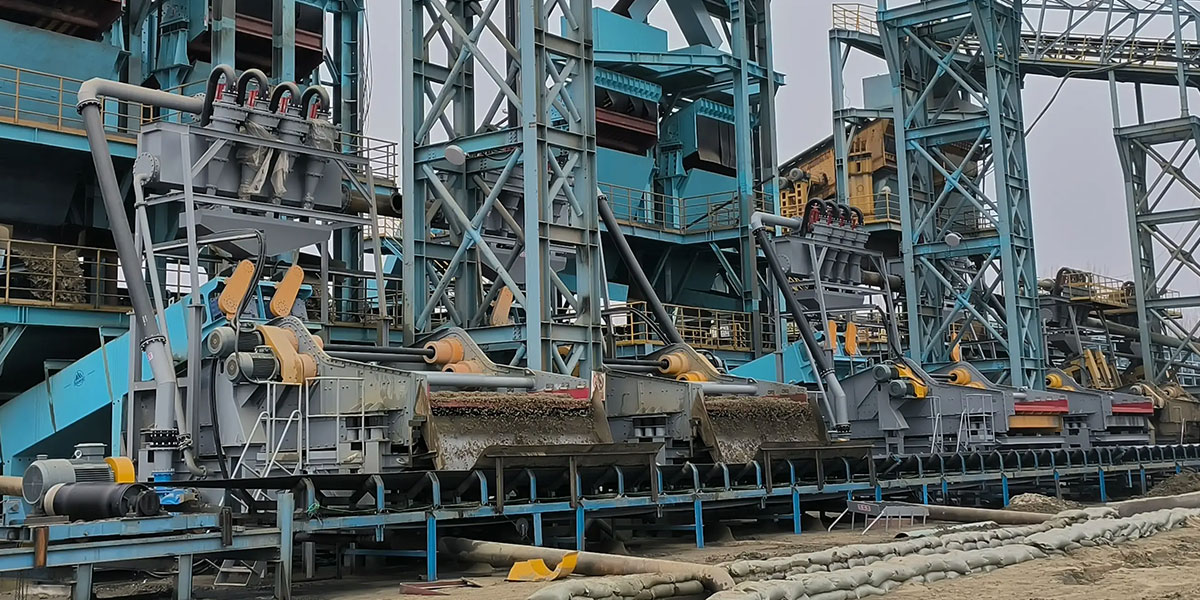
    2.What Core Equipment Makes an Excellent Sand Making Production Line?
    To transform large raw ore into high-grade sand with excellent particle shape, the material must pass through five critical processing stages. A poor equipment choice at any single stage will trigger the "wooden barrel effect," bottlenecking the entire production capacity.

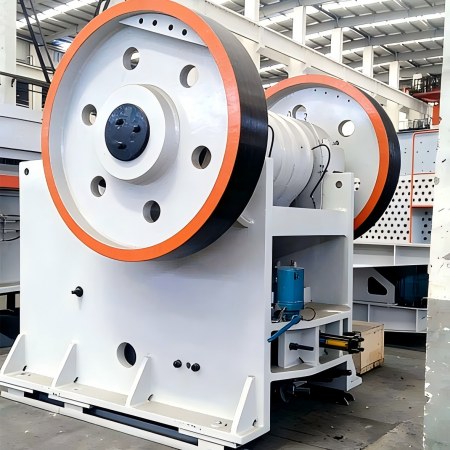
    Primary Crushing: Breaking Down Large Stone with Jaw Crushers


    Jaw crushers are primarily responsible for processing run-of-mine rock—massive boulders (typically 500mm–1000mm or larger) extracted directly from the quarry. By utilizing the compressive force of the jaw plates, they perform primary crushing, reducing these large rocks to a feed size suitable for secondary crushing equipment. Our primary crushers feature powerful crushing force, a high reduction ratio, and exceptional impact resistance and durability.

                                                                   

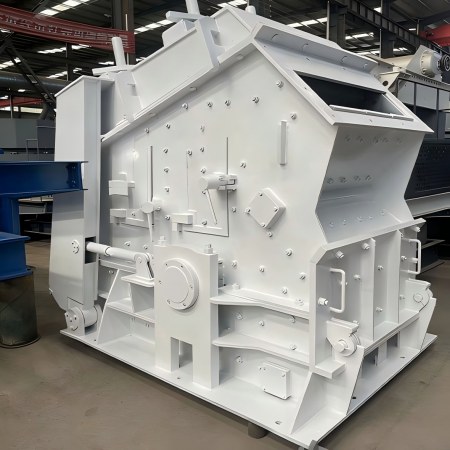
    Secondary Crushing Equipment : Impact Crusher Excels at Shaping

    At this stage, the process flow is strategically routed based on material hardness and abrasiveness. For low-to-medium hardness materials, such as limestone, dolomite, gypsum, and construction waste—the Impact Crusher is the optimal choice. Its high-speed rotor drives blow bars to fracture the rock along natural cleavage planes, delivering exceptionally well-shaped aggregate. However, it is not recommended for high-hardness materials, as excessive wear on consumable parts would significantly drive up operating costs.
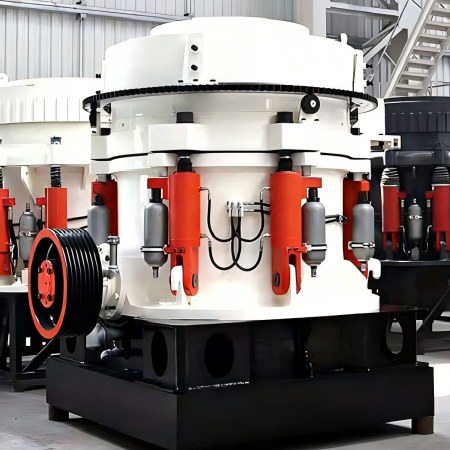


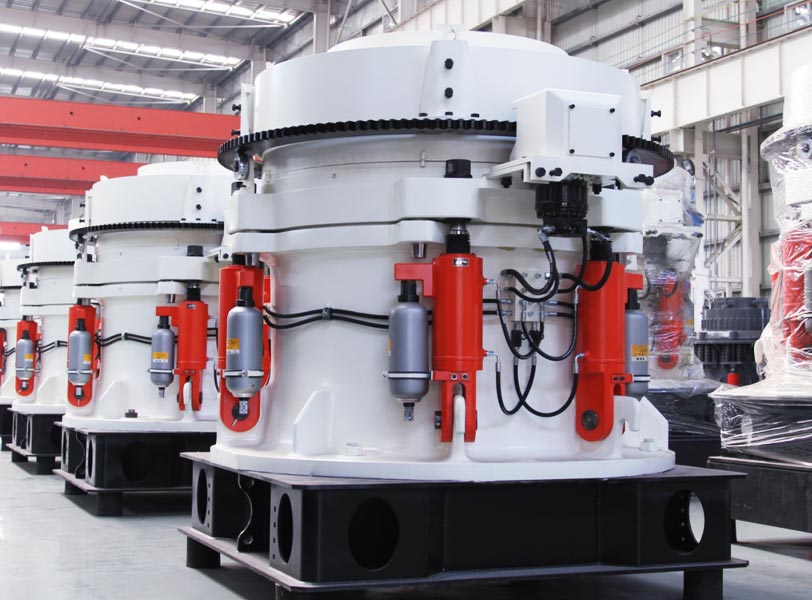
    Secondary Crushing : Cone Crusher Mastering Hard Rock

    Naturally, high-hardness materials—such as granite, basalt, river pebbles, and quartzite—demand the Cone Crusher. Leveraging the principle of lamination crushing, it reliably reduces aggregate to below 40mm with minimal wear on consumable parts, providing standardized feed for the downstream sand-making stage. While the output may contain a certain proportion of flaky particles, its proven durability in processing hard rock ensures superior long-term ROI.


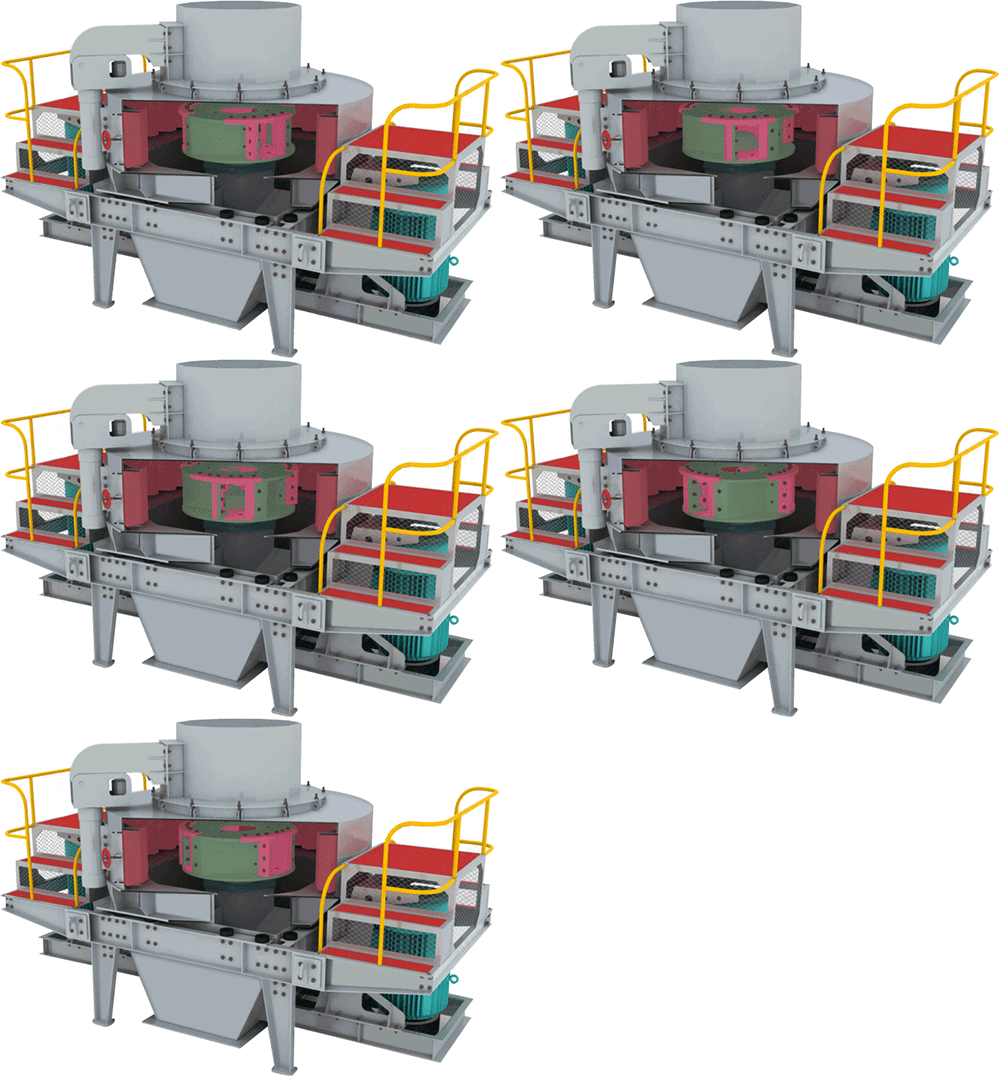
    Core Sand Maker: VSI Vertical Shaft Impact Crusher
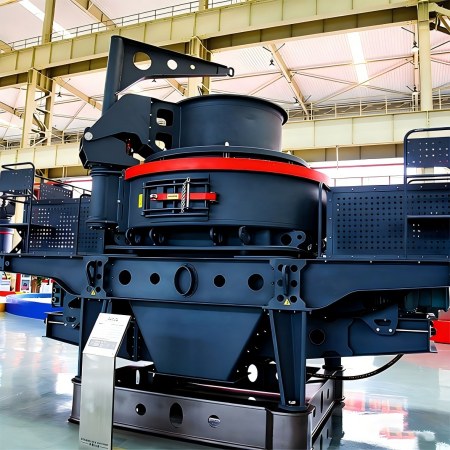
    Its primary function transcends simple crushing. Driven by a high-speed rotor spinning at 60–90 m/s, the VSI crusher subjects stones to intense autogenous rock-on-rock collisions and impacts against anvils within the crushing chamber. This process effectively rounds off sharp edges and eliminates flaky particles, ultimately producing well-shaped manufactured sand that meets the stringent specifications for high-grade concrete.


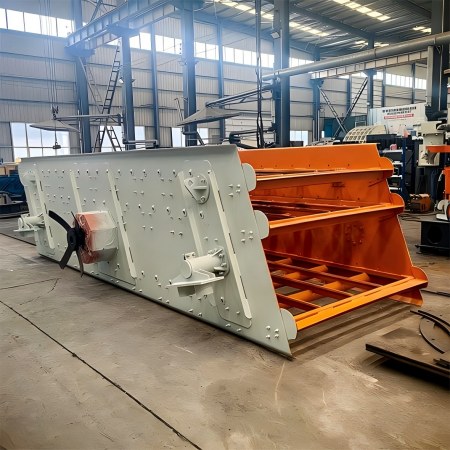
    Key Screening Equipment: Circular Vibrating Screen

    Manufactured sand production operates as a closed-circuit system, with the Circular Vibrating Screen serving as its central dispatcher. Mixed material from the VSI crusher is fed via conveyor onto the screen, where multiple deck layers work in parallel to precisely classify the output into distinct fractions: 0–5 mm (finished sand), 5–10 mm, and 10–20 mm (finished aggregate). Oversized particles that fail to meet specification are intercepted and routed back to the VSI crusher via a return conveyor for reprocessing.


    Washing & Recovery: Wheel Bucket/Spiral Sand Washers and Fine Sand Recovery System
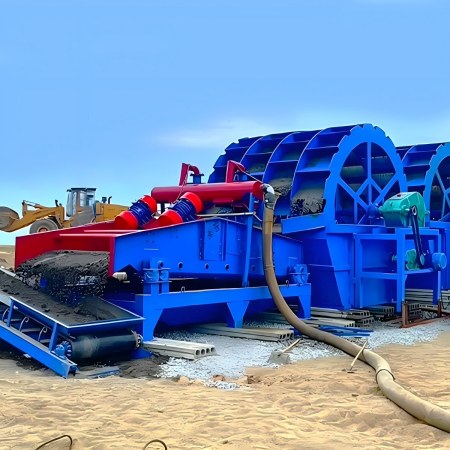
    The final stage focuses on product refinement. Sand Washers utilize water flow to remove trace clay and dust, significantly enhancing the cleanliness of the manufactured sand. However, this process inevitably causes fine sand particles (0.16–0.315 mm) to be lost in the effluent. To address this, a Fine Sand Recovery System is integrated to capture these lost fines and reintegrate them into the final product, ensuring the fineness modulus remains stable within the optimal range of 2.6–3.0.
                                                    sand washing and recycling machine
      

    3.What are the standards for high-quality manufactured sand?

    The price premium of manufactured sand is directly tied to its mechanical performance in concrete structures. Evaluating its quality hinges on four standardized physical indicators:

    1) Fineness Modulus (FM)

    For high-grade concrete (C50 and above), the FM must be strictly maintained between 2.6 and 3.0, classifying it as standard medium sand. An excessively high FM (>3.2) leads to segregation and poor workability, while an excessively low FM (<2.2) significantly increases the total surface area of the aggregate, resulting in substantially higher cement consumption and admixture costs per cubic meter.

    2) Gradation Curve

    Premium manufactured sand must comply with Zone 2 gradation requirements as specified in national standards (e.g., GB/T 14684) or international equivalents. This requires a smooth, continuous distribution of cumulative passing percentages across key sieve sizes: 4.75 mm, 2.36 mm, 1.18 mm, 0.6 mm, 0.3 mm, and 0.15 mm. Gaps in the gradation increase inter-particle voids and compromise packing density.

    3) Elongated and Flaky Particle Content

    The proportion of elongated and flaky particles (ideally kept below 8%) has a direct impact on compressive strength. Cubical particles enable optimal interlocking and load transfer, whereas flaky particles are prone to fracture under stress. They also increase internal friction during mixing, thereby reducing the workability of the fresh concrete.

    4) Stone Powder Content & Methylene Blue (MB) Value

    Stone powder (quartz or calcite particles <0.075 mm) can provide a beneficial micro-aggregate effect by filling capillary pores. However, the Methylene Blue (MB) test is essential to distinguish between "beneficial stone powder" and "deleterious clay":
    • MB Value < 1.4: Classified as safe stone powder; allowable content can be relaxed to 7%–10%.
    • MB Value ≥ 1.4: Indicates excessive clay content; mandatory removal via processing is required.
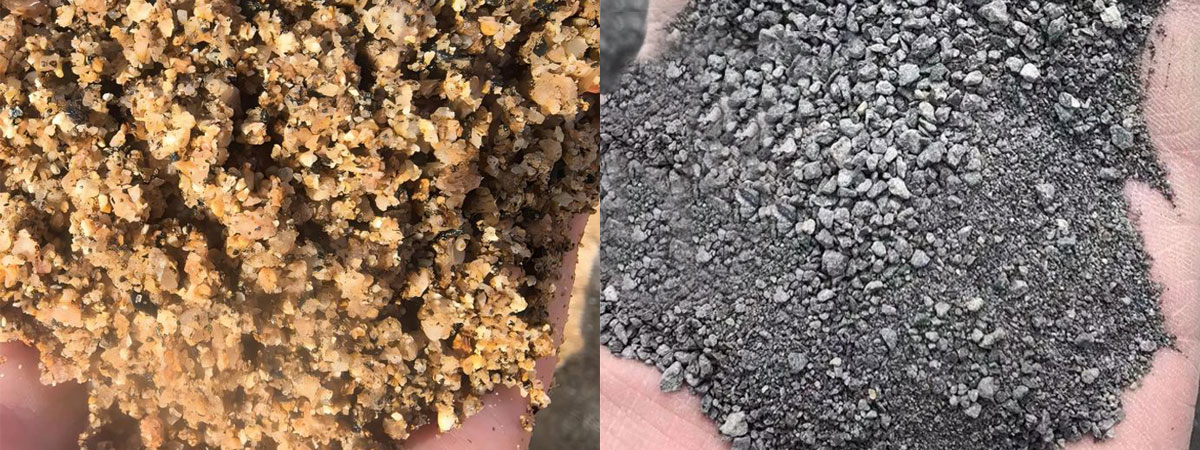
      Visual Comparison: Premium vs. Inferior Manufactured Sand.

    4.How to Configure Secondary Crushing Equipment for Different Rock Types?

    Secondary crushing is the critical determinant of the overall operating expenditure (OPEX) for the entire production line. Equipment selection must not be arbitrary; it requires a quantitative configuration strictly based on the Uniaxial Compressive Strength (UCS) and Abrasiveness Index (Ai) of the raw rock:
    Raw Rock Geological Properties Representative Materials Recommended Secondary Crushing Config. Process Engineering Analysis
    Low Hardness & Low Abrasiveness
    UCS < 150 MPa Ai < 0.1
    Limestone, Dolomite,
    Marble, C&D Waste
    Jaw Crusher +
    Impact Crusher
    Impact Crushing Principle:
    Utilizes high-kinetic-energy rotor impact to fracture material along natural crystal cleavage planes.

    ✅ Crushing ratio up to 20+
    ✅ Excellent single-pass sand yield & product shape
    ✅ Significantly reduces downstream VSI shaping load
    High Hardness & High Abrasiveness
    UCS ≥ 150 MPa Ai ≥ 0.3
    River Pebble, Granite,
    Basalt, Diabase, Iron Ore
    Jaw Crusher +
    Cone Crusher
    Interparticle Crushing Principle:
    Compressive stress far exceeds material yield limit.

    ⚠️ Using Impact Crusher on hard rock reduces blow bar & liner life to tens of hours
    ✅ Cone Crusher extends wear parts service life by multiples
    ✅ Dramatically lowers per-ton abrasive wear cost

    5. Why can the VSI sand-making machine manufactured by XLM produce high-quality manufactured sand? What are its core advantages?

    For VSI sand-making machines, the biggest concern is the rapid wear of wear-resistant parts; frequent shutdowns for replacements not only delay production and revenue generation but also drive up spare parts costs. Another issue arises when output and quality fall short of expectations, yet electricity costs remain high. XLM (Xianglong Machinery) has upgraded three core hardware components to boost output and reduce costs while simultaneously improving the quality of the manufactured sand:

    Ultra-Wear-Resistant, Reversible Rotor Tips: 50% Cost Savings
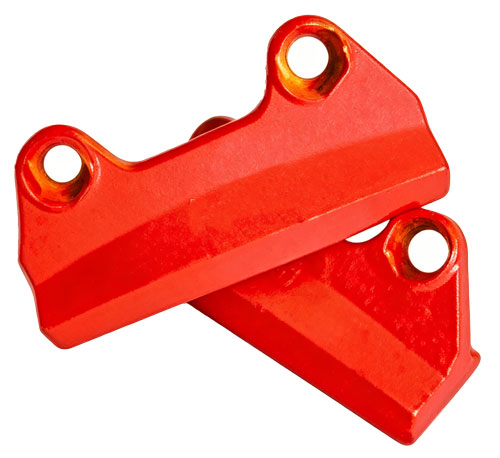
    We have embedded a special alloy into the rotor tips and applied cryogenic treatment, achieving an optimal balance of extreme hardness and toughness. When processing hard rock, our rotor tips deliver a 30–40% longer service life. More importantly, their modular, reversible design allows them to be flipped over for continued use rather than replaced entirely, cutting wear part costs by half.
               

    Optimized Deep-Cavity Flow Path: 25% Higher Throughput

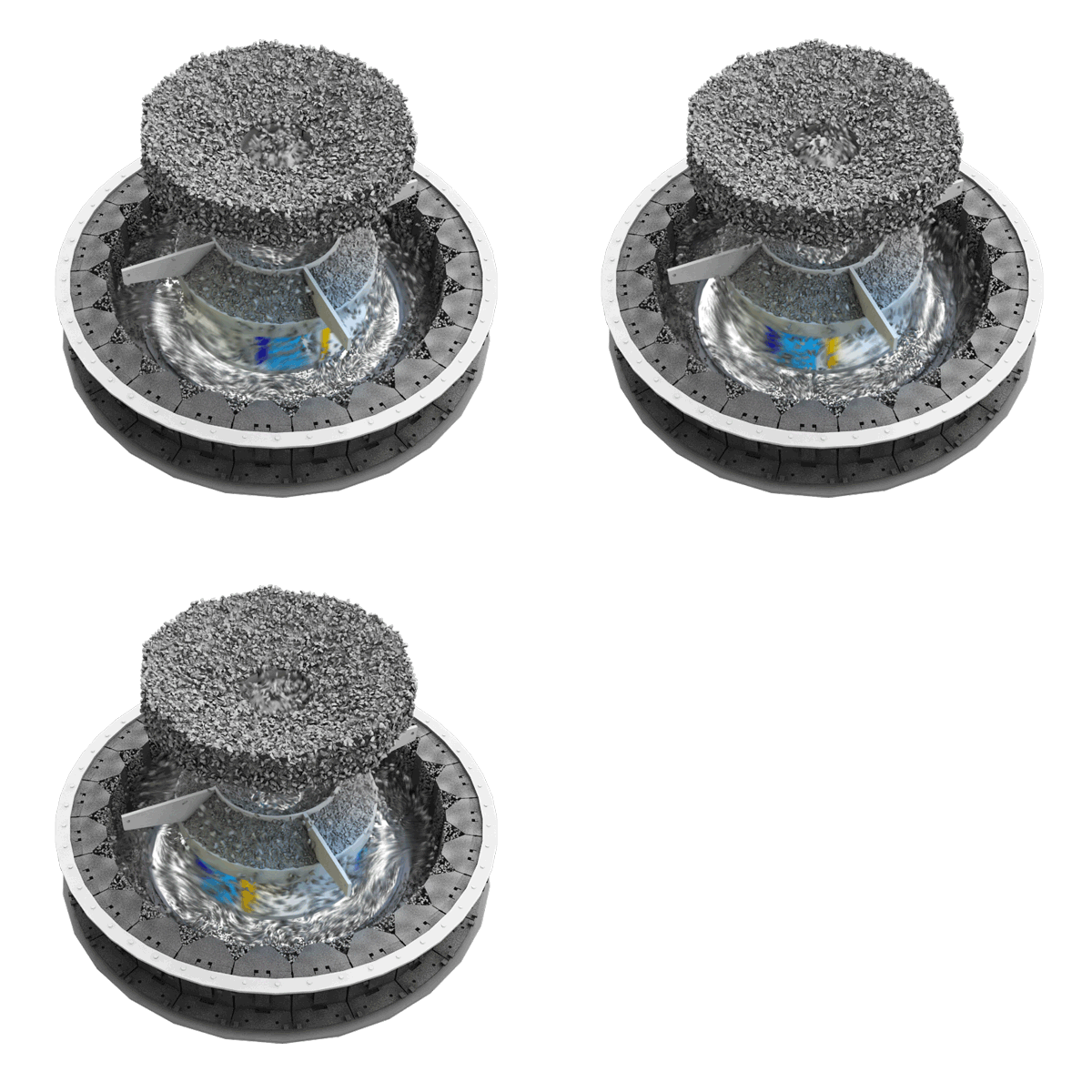
    We have redesigned and expanded the core crushing chamber to accommodate higher material flow velocity and streamline the feed-to-discharge trajectory. Without increasing motor power, the machine achieves a 25% higher hourly throughput. The optimized deep-cavity geometry also promotes more thorough rock-on-rock impact, boosting the sand yield rate to 35–45% and minimizing recirculating load from oversize material.
     ​​​​

    Dual Lubrication System: Guaranteed Continuous Operation
    We have innovatively integrated dual oil pumps with multi-layer dust-proof seals. This system precisely controls bearing temperature during operation, significantly extends bearing service life, and virtually eliminates unplanned downtime due to lubrication failure.
                                                              

    6.Why is XLM able to pass European and American certifications and achieve high-standard global delivery?

    Trust is a critical issue; uncertainty is the primary concern for any investor engaging in cross-border procurement. Issues such as dimensional mismatches, customs clearance failures, or sluggish after-sales support during equipment transport and installation can lead to project delays or work stoppages, resulting in significant financial losses.
    XiangLong Machinery (XLM) has extensive experience in international services. By establishing a standardized and clearly defined overall delivery system, it has obtained authoritative quality certifications from major global markets, helping customers minimize the risks and uncertainties of cross-border procurement.
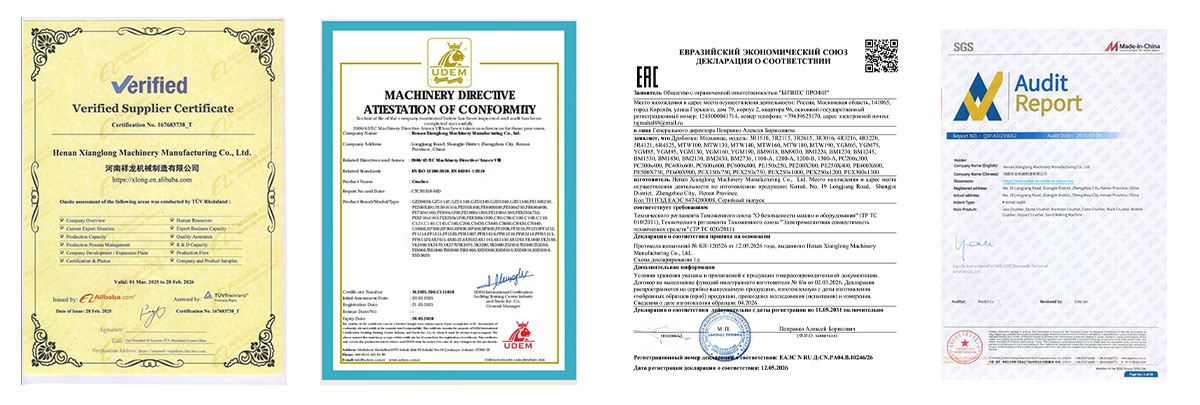
    XLM adopts an EPC Turnkey Project model to eliminate ambiguous supplier responsibilities. Instead of sourcing equipment from multiple vendors, clients sign a single contract with XLM. We assume full responsibility for the final operational performance of the entire production line:

    1)Material Testing & Precision Equipment Selection: Clients send local rock samples to our laboratory, where we conduct rigorous scientific testing for Uniaxial Compressive Strength (UCS) and Abrasiveness Index (Ai). Equipment selection is then precisely calibrated to these metrics, eliminating speculative investment.
    2) 3D Digital Plant Design: We create a 1:1 digital simulation of the client’s site layout and accurately calculate material flow velocities. This proactive engineering prevents on-site bottlenecks and structural conflicts before installation begins.
    3)On-Site Installation Supervision & Operational Training: XLM’s overseas resident engineers deploy directly to the project site to supervise civil works, equipment hoisting, and commissioning. We also provide comprehensive training for local operators, ensuring they master routine maintenance and troubleshooting protocols.
    Rapid After-Sales Response: Through regular online and offline follow-ups, we continuously monitor actual operating conditions. This enables us to proactively prevent potential issues or resolve existing problems with maximum speed.

    Large-scale projects demand high stability and minimal risk. Choosing XLM means securing both. Our core commitment remains unwavering: strict adherence to contractual standards, guaranteed on-time plant commissioning, and delivering the expected return on investment for our clients.
    Whether you are in the planning, design, or procurement phase about Sand Making Production line, we invite you to consult with XLM. Our engineering team is available 24/7 to provide expert support.
            
    Release time: 2026-06-06

    Jaw Crusher vs Cone Crusher vs Impact Crusher: How to Choose for Your Quarry

    Jaw Crusher vs. Impact Crusher: How to Choose for Your Quarry?
    Related blog
    2026-09-12
    Advantages of Mobile Stone Crusher for Construction Projects
    2026-09-03
    Stone Crusher Machine Price Guide 2026 XLM Machinery
    2026-08-12
    Top 6 Factors to Consider Before Buying a Stone Crusher
    2026-08-08
    How to Choose the Right Cone Crusher for Hard Rock Crushing

    Tel: +86 13253634888
    E-mail: info@xlmac.com
    Whatsapp: +86 13253634888

    Engineers Online

    Products

    PE Jaw Crusher

    PF Impact Crusher

    HP Cone Crusher

    VSI Sand Making Machine

    Track-mounted Primary Crusher

    Raymond Mill

    Business

    Aggregate

    Mining Industry

    Industrial Minerals

    Construction

    Blog

    crusher

    SiteMap
    Subscribe
    (509895)
    Email
    info@xlmac.com
    Phone
    +8613253634888
    WhatsApp
    +8613253634888
    Inquiry
    Inquiry
    Top