How to Choose the Right Cone Crusher for Hard Rock Crushing
1. Why Hard‑Rock Crushing Creates Unique Challenges for Cone Crushers
Before selecting hardware, operators must clearly understand what makes hard rock fundamentally different from ordinary medium‑soft rock such as limestone. Hard rock here refers to rock with uniaxial compressive strength above 150 MPa, Mohs hardness 6‑8, and Bond abrasion index higher than 0.20. Granite and basalt contain large‑proportion quartz minerals; silica content can reach 45‑75 %. Quartz particles produce persistent abrasive scratching on mantle and concave liners during compression crushing cycles.
Three core operational challenges hard rock brings to cone crusher units:
First, high crushing‑force requirement. Soft rock can fracture under relatively low squeezing force. Hard rock needs sustained high magnitude compression force to achieve effective inter‑particle laminated crushing. If crusher frame, main shaft, eccentric assembly and hydraulic system cannot deliver enough stable crushing force, throughput will drop sharply even with sufficient motor power. Many low‑cost cone crushers on the market advertise high nominal capacity, yet their structural strength cannot sustain continuous heavy‑load hard‑rock operation, resulting in frequent fatigue damage to key components.
Second, accelerated wear‑part consumption. Under identical throughput, liner service life for granite and basalt can drop to 40‑60 % compared with limestone conditions. Wear‑part cost becomes one of the largest‑proportion operating expenditures for hard‑rock quarries. Improper model or cavity selection further magnifies liner consumption, raising cost‑per‑ton significantly.
Third, strict requirement for particle geometry. High‑grade infrastructure aggregates demand low flaky‑elongated particle content. Hard rock tends to generate flaky products if crushing stroke, speed and cavity profile are mismatched. Unlike impact crushers suitable for soft rock, cone crushers realize particle shaping mainly by laminated compression between rock‑on‑rock layers inside the crushing chamber, rather than high‑speed impact blow‑bar striking.
A critical industry reminder from XLM Machinery engineering department: Impact‑type secondary crushing equipment is not recommended for high‑silica hard rock. Blow‑bars and impact plates wear extremely fast under granite and basalt conditions, bringing frequent maintenance stops and unstable operating costs. For hard‑rock secondary‑tertiary circuit, cone crusher remains the most technically‑economically feasible solution.
Even among cone crusher models, performance gap under hard‑rock workload can be huge. A cone crusher performing reliably in limestone quarry may face frequent breakdowns once deployed for basalt processing. Material property testing is the first step before model selection. XLM Machinery provides free‑of‑charge material‑property evaluation service for global customers, covering compressive strength, abrasiveness index and feed‑size gradation analysis.
2. Core Working Principles of Cone Crushers in Hard‑Rock Applications
Cone crushers adopt compression‑based laminated crushing mechanism. Driven by eccentric bushing, the mantle performs gyratory oscillatory movement, continuously closing and opening the gap between mantle and concave liners. Raw material receives multi‑direction extrusion, squeezing and inter‑particle friction inside the cavity, and fractures along natural mineral grain boundaries instead of single‑point smashing.
For hard rock, laminated crushing delivers two irreplaceable advantages:
- Rock‑against‑rock grinding reduces direct metal‑to‑rock friction load, slowing liner abrasion speed.
- Cubical particle shape is obtained, meeting strict aggregate standards for highway, bridge and high‑strength concrete projects.
Two core adjustment parameters define cone crusher output and product quality: Closed‑Side Setting (CSS) and Open‑Side Setting (OSS). CSS represents the minimal gap between mantle and concave liner, directly determining the minimum finished‑product size. OSS means maximum gap dimension at the same rotational position. Under hard‑rock conditions, blindly pursuing overly narrow CSS will cause severe liner overload, sharp wear acceleration and throughput decline. Many new operators fall into this trap: they continuously tighten CSS hoping for finer output size, but end up with low hourly output and frequent liner replacement.
Choke‑feeding principle is another key point for hard‑rock cone crusher performance. Hard‑rock cone crushers are designed to run under full‑chamber choke‑feed state. Sufficient material filling inside cavity guarantees rock‑on‑rock laminated crushing effect. Insufficient feeding leads to single‑particle crushing mode, worse particle shape and uneven liner wear. XLM Machinery’s technical specification documents always remind customers to configure matched vibrating feeder and pre‑screening equipment to achieve stable choke‑feed condition.


3. Main Cone Crusher Categories & XLM Machinery Product Portfolio for Hard Rock
XLM Machinery manufactures three mainstream cone‑crusher series: spring cone crusher , single‑cylinder hydraulic cone crusher , multi‑cylinder hydraulic cone crusher. Each series has different structural characteristics, applicable scenarios and performance boundaries facing hard‑rock conditions. It is critical for buyers not to simply judge product quality by price tag, but match model type to project scale, material hardness and maintenance‑support condition.
3.1 Spring Cone Crusher
The spring cone crusher is a mature traditional solution. Pre‑loaded spring groups undertake overload‑protection function. When uncrushable tramp iron enters crushing chamber, springs compress to release foreign objects, and then restore pre‑set gap.
- Advantages: Relatively low capital investment, simple mechanical structure, convenient spare‑parts procurement in remote regions without complex hydraulic‑system maintenance requirement.
- Hard‑rock limitations: Under long‑term heavy‑load hard‑rock impact, spring assemblies suffer metal fatigue gradually. Spring‑pre‑tension attenuation will cause bowl‑floating phenomenon, disturbing CSS stability and worsening product‑size consistency. Tramp‑iron passing stroke is limited. Once large‑size metal debris blocks cavity, manual cleaning is required, creating long downtime. Not suitable for large‑scale high‑abrasion hard‑rock continuous‑production lines.
- XLM application suggestion: PY‑series fits small‑scale quarries with limited budget, medium‑hard rock, or temporary mobile‑auxiliary crushing tasks. Not recommended as core secondary crusher for 200 TPH+ granite/basalt fixed‑plant projects.
3.2 Single‑Cylinder Hydraulic Cone Crusher
Single‑large‑hydraulic‑cylinder integrates discharge‑gap adjustment, overload protection and supporting function all in one component. Simple internal layout reduces quantity of hydraulic‑circuit components.
- Advantages: Compact structure, easy CSS remote adjustment, relatively low maintenance workload compared with multi‑cylinder models. Good comprehensive cost‑performance for medium‑hard‑rock conditions.
- Hard‑rock limitations: Under extreme high‑abrasion hard rock such as high‑silicon basalt, single‑cylinder structural‑force‑bearing boundary exists. When processing large‑size hard feed, instantaneous impact load acts on the single central hydraulic cylinder, putting forward strict requirements for feed‑size control. If feed‑size exceeds design specification frequently, service life of sealing assemblies will decrease obviously.
- XLM application suggestion: XSC‑series works well for tertiary fine‑crushing stage of hard‑rock lines, or secondary crushing for moderately hard granite with well‑controlled feed size. It is widely selected for 50‑220 TPH aggregate‑making projects.


3.3 Multi‑Cylinder Hydraulic Cone Crusher
XMC‑series multi‑cylinder hydraulic cone crusher represents XLM’s flagship hard‑rock crushing solution. Multiple hydraulic cylinders are evenly distributed around adjustment bowl. Hydraulic system undertakes locking, gap adjustment and tramp‑iron protection separately. Main‑shaft adopts heavy‑diameter 42CrMo alloy for high‑impact‑resistance performance. Optimized cavity‑profile groups are specially developed for high‑abrasion hard‑rock working conditions.
- Advantages: Multiple hydraulic cylinders share impact load, strong anti‑over‑impact capability. When tramp‑iron passes through cavity, rapid pressure relief happens within milliseconds, automatically discharge foreign objects and reset without halting production. Multiple optional cavity profiles for secondary, tertiary and quaternary crushing tasks. Support stable choke‑feed continuous operation under high‑hardness granite, basalt, quartzite. PLC‑compatible intelligent monitoring interface supports real‑time tracking of pressure, temperature, CSS value and main‑motor load.
- Limitation: Higher upfront investment cost; hydraulic‑lubrication system requires standardized maintenance management.
- XLM application suggestion: XMC multi‑cylinder hydraulic cone crusher is the preferred core secondary‑tertiary equipment for large‑capacity hard‑rock quarry projects of 150‑850 TPH. It is widely deployed in global basalt, granite and metal‑ore crushing sites.


3.4 Brief Comparison Table for Cone‑Crusher Series
| Model Series | Suitable Hard‑Rock Scenario | Typical Capacity Range | Core Advantage | Main Restriction for Hard Rock |
|---|---|---|---|---|
| Spring Cone crusher | Small‑scale, low‑budget, medium‑hard rock | 30‑300 TPH | Low purchase cost, simple mechanics | Spring fatigue risk, limited tramp‑iron protection |
| Single‑Cylinder Hydraulic cone‑crusher | Tertiary fine crushing, medium‑capacity hard‑rock lines | 40‑450 TPH | Simple hydraulic layout, easy Closed‑Side Setting adjustment | Strict feed‑size control required |
| Multi‑Cylinder Hydraulic cone‑crusher | Large‑scale secondary/tertiary hard‑rock crushing | 60‑550 TPH | Strong anti‑impact, stable laminated crushing, multiple cavity options | Higher initial investment, standardized hydraulic maintenance needed |
4. Critical Technical Selection Criteria for Hard‑Rock Cone Crusher
After confirming cone‑crusher type, purchasers need to evaluate multiple inter‑related technical indicators, instead of only checking one‑dimensional index such as motor power or feed‑opening size. XLM Machinery’s engineering team summarizes six core judging dimensions for hard‑rock‑oriented selection.
4.1 Raw‑material physical properties
Hardness, abrasiveness index, silica content and feed‑size gradation are the starting point of all configuration work. Even the same granite quarry may show different abrasiveness if ore‑body zones differ. If feed contains high‑proportion sticky clay, pre‑screening and material‑washing pretreatment must be arranged before feeding into cone crusher; otherwise chamber blockage and liner localized wear will occur frequently.
XLM engineers will ask customers to provide rock‑sample test‑report data. If customers do not have lab‑test data, we will guide customers to collect representative rock samples for assessment.
4.2 Feed‑size requirement
Maximum feed size entering cone crusher must match crusher feed‑opening dimension. For hard rock, it is not allowed to frequently feed material reaching absolute maximum feed‑opening limit. XLM practical recommendation: The actual maximum feed‑block size should be controlled within 80 % of equipment nominal maximum feed‑opening. Oversized hard blocks create sharp peak‑impact load, damaging main‑shaft, eccentric assembly and frame. Many site failures root in upstream jaw‑crusher product‑size out‑of‑control, sending over‑sized hard stone into cone crusher.
4.3 Target hourly throughput (with reasonable margin)
When selecting model for hard rock, do not select equipment exactly matching your target throughput. Hard‑rock crushing consumes more energy per ton than soft rock. Actual output will be lower than nominal soft‑rock‑condition data. XLM suggests reserving 15‑20 % capacity safety margin for hard‑rock projects. This margin helps handle feed‑size fluctuation, seasonal ore‑property variation and peak‑period production requirement. Running cone crusher persistently at 100 %‑over‑rated load will shorten whole‑machine service life obviously.
4.4 Finished‑product specifications
Clarify required aggregate size fractions, allowable flaky‑particle percentage and CSS adjusting range. Different finished‑product targets decide cavity‑type selection and whether multi‑stage crushing is needed. For highway‑grade basalt aggregate requiring flaky content ≤10 %, only well‑matched cone‑crusher cavity plus closed‑circuit screening can meet specification; single‑stage open‑circuit crushing cannot reach quality standard.
4.5 Site‑side infrastructure conditions
Check available grid‑power capacity, voltage stability, installation‑space dimension, foundation‑construction condition, and spare‑parts logistics accessibility. In remote mining sites with inconvenient spare‑part transportation, besides equipment performance, you also need to evaluate whether supplier can deliver critical wear‑parts within acceptable lead‑time. This is one of the advantages of XLM Machinery global spare‑parts warehouse network.
4.6 On‑site maintenance‑team technical capability
Multi‑cylinder hydraulic cone crusher delivers superior hard‑rock performance, yet it requires operators to master basic hydraulic‑lubrication‑system inspection knowledge. If the site lacks technically‑trained personnel, XLM will deliver systematic operator‑training together with equipment commissioning. For sites with extremely limited‑technical‑support resources, we will also give balanced suggestions between performance and maintenance‑complexity.
5. Cavity Profile, Eccentric Throw & CSS Setting — The Most Overlooked Selection Factors
Among all selection links, cavity‑profile matching is the most frequently ignored by buyers, yet it directly determines throughput, liner‑service‑life and particle shape for hard‑rock crushing. Same cone‑crusher host machine equipped with different mantle‑concave liner sets can realize completely different operating performance. Many customers buy a well‑known‑brand cone crusher, but still obtain poor production‑result, simply because they install unsuitable cavity for hard‑rock secondary‑crushing task.
XLM multi‑cylinder cone crusher provides multiple interchangeable cavity‑profile groups: coarse‑medium cavity for secondary crushing receiving 150‑250 mm hard‑rock feed; medium‑fine cavity for middle‑crushing stage; short‑head fine cavity for tertiary fine‑crushing and sand‑pre‑shaping. Each cavity‑profile is optimized for corresponding feed‑size interval and hardness range.
For hard‑rock secondary crushing task: Do not select short‑head fine cavity. Short‑head cavity owns small feed‑accepting window. Large hard‑rock blocks cannot enter effective crushing zone, leading to material bridging, sharp capacity drop and heavy localized liner wear. Short‑head cavity is designed for tertiary crushing after primary‑secondary pre‑reduction.
Eccentric throw is another key parameter. Throw decides mantle gyration stroke magnitude. Larger throw brings higher single‑cycle compression displacement, improves hard‑rock crushing capacity, but meanwhile raises component impact load. XLM cone‑crusher models support optional‑throw configuration according to customer‑material‑condition. For high‑abrasive granite and basalt, XLM engineers will select matched throw value instead of blindly pursuing maximum throw.
CSS setting principles for hard‑rock conditions summarized from XLM field‑operation database:
- Do not pursue excessively narrow CSS for hard rock. Tight CSS increases unit‑material crushing‑cycle times, accelerates liner consumption and reduces hourly throughput.
- CSS value should coordinate with screening‑mesh aperture in closed‑circuit system. Return‑over‑material proportion should stay within reasonable interval, normally 25‑40 % for hard‑rock secondary‑tertiary circuit. Too‑high circulating‑load means mismatch between cone‑crusher performance and screening capacity.
- After liner wears, CSS value drifts gradually. Modern XLM hydraulic cone crushers support real‑time CSS adjustment online without stopping the machine, keeping finished‑product gradation stable during liner‑wear cycle. Traditional spring cone crushers need manual liner‑gasket replacement to modify CSS, which consumes production‑time under hard‑rock continuous‑operation.
6. Total Cost of Ownership (TCO): Beyond Upfront Purchase Price
Many purchasing teams focus only on equipment ex‑factory price, ignoring full‑lifecycle‑cost calculation. For hard‑rock working‑conditions, wear‑parts cost, energy consumption, downtime‑loss and maintenance‑expense often account for larger proportion of total project expenditure than initial‑procurement cost. XLM Machinery advocates customers to evaluate cone‑crusher solution from Total Cost of Ownership perspective.
Main components of TCO for hard‑rock cone‑crusher:
- One‑time capital expenditure: Equipment price, inland and ocean‑freight cost, installation‑commissioning expense.
- Wear‑parts operating cost: Mantle, concave liner, bowl‑seat liner, eccentric‑bushes, sealing components. In hard‑rock quarry, wear‑parts cost can reach 30‑50 % of whole‑machine‑operating‑expense.
- Energy consumption cost: Motor power multiplied by actual working‑hours. Poor‑matching model will bring higher kWh‑per‑ton consumption.
- Maintenance‑labor‑cost: Man‑hours for daily inspection, lubrication, liner‑replacement and hydraulic‑system service.
- Downtime economic loss: Unplanned shutdown caused by component‑failure leads to production‑volume loss, which is easily overlooked in budget calculation.
Case reference from XLM overseas‑project: One basalt quarry customer initially chose low‑price spring‑cone crusher for secondary crushing. Purchase‑cost was 32 % lower than multi‑cylinder hydraulic cone crusher. But after running 8 months, site‑statistic showed liner‑replacement frequency was extremely high; spring‑fatigue failures caused multiple unplanned shutdowns. Finally customer upgraded to XLM model. Although initial investment increased, cost‑per‑ton of finished aggregate dropped by 18.7 %, and annual comprehensive‑economic‑benefit improved significantly.
It does not mean higher‑price model is always better. For small‑scale projects with low annual‑operating‑hours, properly‑selected spring‑cone crusher can still achieve acceptable TCO. Core logic is matching equipment grade to project scale and material‑abrasiveness.
7. Common Costly Mistakes When Selecting Cone Crushers for Hard Rock
Based on XLM after‑sales‑engineering statistics accumulated from global hard‑rock‑crushing sites, we sort out six most‑frequent selection mistakes causing economic loss for quarry operators.
- Mistake 1: Copy‑paste soft‑rock‑condition parameters directly for hard‑rock project. Many manufacturers’ brochures mark high‑capacity data tested under limestone conditions. Customers directly adopt these nominal‑parameters for granite/basalt project, resulting in actual output far below expectation.
- Mistake 2: Treat cone crusher as primary crushing equipment for large‑size hard boulders. Cone crusher is designed for secondary‑tertiary crushing. Feeding massive raw hard‑rock boulders directly into cone crusher will cause frequent overload and component damage.
- Mistake 3: Blindly pursuing finer discharge‑size by over‑tight CSS. Excessively narrow CSS leads to sharp liner‑wear acceleration, capacity‑reduction and high circulating‑load.
- Mistake 4: Ignoring cavity‑profile selection, only paying attention to host‑model number. Same cone‑crusher host with mismatched cavity will perform poorly under hard‑rock.
- Mistake 5: Neglecting choke‑feed requirement, configure insufficient‑capacity feeding‑equipment. Cone crusher needs full‑chamber material to achieve ideal crushing effect.
- Mistake 6: Under‑estimating spare‑parts supply risk in remote‑area projects. Production stoppage from delayed parts can cause heavy financial losses.
8. Matching Cone Crusher to Full‑Plant Circuit Layout (Practical Project Experience)
Cone‑crusher performance cannot be isolated from whole‑production‑circuit. Even best‑quality cone‑crusher cannot deliver expected‑index if upstream‑downstream equipment mismatches. XLM Machinery always completes whole‑circuit‑layout design together with cone‑crusher‑model‑selection for hard‑rock‑project customers.
Classic hard‑rock secondary‑tertiary circuit schemes:
- Medium‑large‑scale granite/basalt plant: Jaw‑primary crushing → pre‑screening → multi‑cylinder hydraulic cone (secondary) → vibrating screen closed‑circuit → cone (tertiary) → finished aggregate classification.
- Medium‑capacity hard‑rock plant: Jaw‑crusher → single‑cylinder hydraulic cone → closed‑circuit screening.
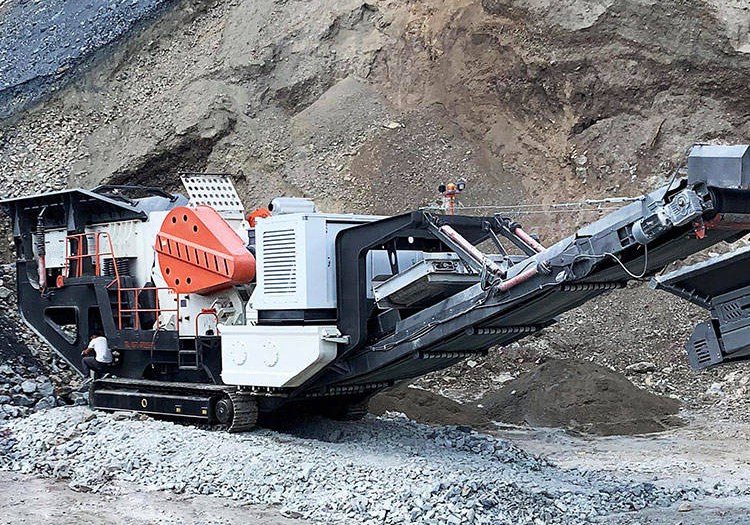
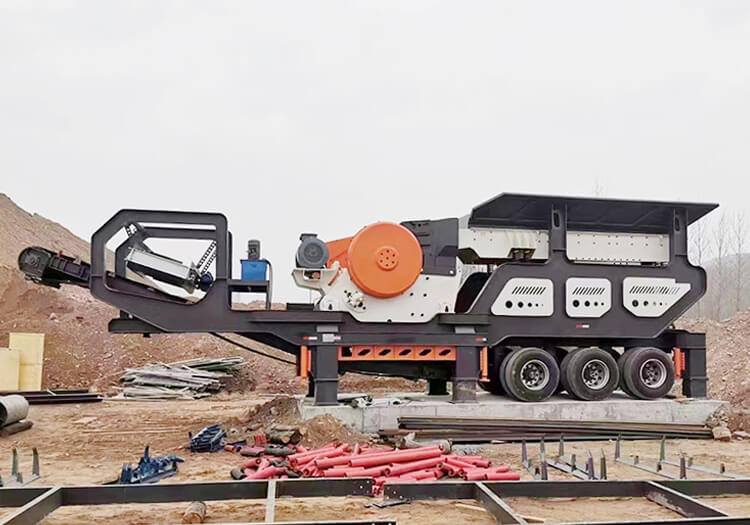
- Mobile hard‑rock crushing: XLM mobile crushing plant equipped with cone unit for temporary quarries or construction waste recycling.
Key layout‑reminder: The material‑feeding‑height to cone‑crusher inlet should guarantee uniform circumferential feeding. Deviated unilateral feeding will cause liner partial‑wear, shorten service‑life and create uneven product‑size. layout‑drawing will specially optimize feeding‑chute‑structure to realize even material distribution around cavity.

9. Wear‑Component Strategy for Hard‑Rock Working Conditions
Wear‑parts are consumable core‑components for hard‑rock cone‑crusher. XLM Machinery self‑produces high‑manganese alloy mantle and concave liners for our cone‑crusher series. For extra‑high‑abrasion hard‑rock scenarios, we provide optional enhanced‑alloy liner solutions.
Selection guidance for liner‑material:
- Standard high‑manganese steel: Fits most granite and basalt‑crushing‑conditions. Work‑hardening characteristic forms high‑hardness surface layer under continuous impact‑load, balancing wear‑resistance and impact‑toughness.
- Enhanced‑modified alloy liner: For extremely‑abrasive quartzite or high‑silica hard‑rock, service life can increase by 20‑35 % compared with standard manganese‑steel liner.
Operation‑maintenance tips extending liner‑service‑life:
- Strictly forbid over‑size material entering crushing‑chamber.
- Maintain stable choke‑feed state, avoid cavity‑starved‑feeding.
- Monitor CSS drift regularly; adjust hydraulic‑setting timely as liner wears.
- Install iron‑removal‑magnet on upstream‑belt‑conveyor to prevent tramp iron damage.
- Replace or rotate liners when deep grooves appear to avoid host damage.
10. Automation, Monitoring & After‑Sales Support for Hard‑Rock Operations
Modern hard‑rock‑quarries pursue higher‑automation‑level to lower labor‑cost and reduce human‑operation‑error. XLM XMC‑series multi‑cylinder hydraulic cone‑crusher is equipped with standard intelligent‑monitoring system. It tracks main‑motor load, hydraulic‑oil pressure, oil‑temperature, CSS value, lubrication‑system‑state in real‑time. When abnormal‑working‑parameter appears, system triggers early‑warning or protective‑shutdown to avoid equipment‑damage.
Remote‑monitoring‑interface option is available. Project‑manager can check cone‑crusher running‑data remotely, judge liner‑wear tendency and arrange preventive‑maintenance in advance, instead of waiting for breakdown‑happening. For hard‑rock‑site running 24‑hours‑a‑day, predictive‑maintenance greatly reduces unexpected‑stop‑loss.
XLM Machinery provides full‑life‑cycle support:
- Pre‑sales: Material analysis, Proposal design, customized model & cavity recommendation.
- On‑site support: Global installation guidance, commissioning and operator training.
- After‑sales: Remote diagnosis, spare parts supply, regular performance tracking.

11. Real‑World Case Studies from XLM Machinery Hard‑Rock Projects
Case 1: 280 TPH Basalt Aggregate Production Line, East‑Africa Quarry
Raw material: basalt, UCS 190‑230 MPa, high abrasiveness. Finished products for national highway construction, flaky particle ≤10%.
Configuration: jaw crusher + multi‑cylinder hydraulic cone crusher + closed‑circuit screening.
Result: Stable output 270‑300 TPH, liner life 520‑650 hours, tramp iron protection effectively avoids failures.
Case 2: 120 TPH Granite Aggregate Plant, Southeast‑Asia Mountain‑Quarry
Raw material: granite, Mohs hardness 6‑7, limited site space and maintenance team.
Configuration: Jaw crusher + single‑cylinder hydraulic cone crusher.
Result: Steady 110‑130 TPH, easy maintenance, reliable remote support.
12. Frequently Asked Questions (FAQ)
A: It is conditional. If feed‑size is strictly controlled, it can work. For large‑feed high‑throughput basalt projects, XMC multi‑cylinder series is more recommended.
A: No. For small‑scale, low‑hour quarries with tight budgets, properly selected spring cones can be economical.
A: For high‑quality aggregates, closed‑circuit is strongly recommended to ensure gradation and cubic shape.
A: Yes. We provide customized cavity design based on material sample analysis.
13. Get Custom Cone Crusher Recommendation from XLM Machinery
Selecting cone crusher for hard‑rock crushing is a systematic engineering work, not simply selecting a model number from catalogue. Wrong‑selection will bring long‑term economic‑loss for your quarry‑project.
If you are evaluating cone‑crusher solution for granite, basalt, quartzite or other hard‑rock‑crushing‑projects, please contact XLM Machinery engineering team. Please provide basic‑project‑information including: raw‑rock‑type, estimated hourly‑capacity, maximum feed‑size, required finished‑aggregate‑size‑fractions, site‑power‑condition and special‑requirements. Our team will deliver customized‑technical‑proposal, cavity‑selection‑suggestion and TCO‑analysis for your reference.
XLM Machinery focuses on hard‑rock‑crushing‑equipment R&D and manufacturing. We provide complete‑set‑solution covering technical‑consulting, equipment‑manufacturing, global‑delivery, site‑commissioning, operator‑training and after‑sales‑spare‑parts‑support for global quarry‑and‑mine‑customers.
Top 6 Factors to Consider Before Buying a Stone Crusher
Advantages of Mobile Stone Crusher for Construction Projects