Jaw Crusher Price: What Factors Affect the Cost?
The jaw crusher stands as the core primary crushing equipment. Its investment cost directly determines the early capital budget, operational stability, and full-cycle return on investment (ROI). When clients inquire about jaw crusher price globally, they often encounter widely varying quotations for seemingly similar models, which causes confusion in decision-making. At XLM Machinery (Xianglong Machinery), a professional manufacturer focusing on R&D, casting, machining, assembly, and global delivery of jaw crushers for decades, we hold a consistent principle: every price difference corresponds to a tangible cost difference in design, materials, craftsmanship, configuration, and service.
1. Core Technical Specifications: The Foundational Determinant of Jaw Crusher Price
Technical specifications are the primary basis for jaw crusher pricing, as they directly define the equipment’s processing capacity, applicable working conditions, structural strength, and material consumption. All XLM jaw crushers are designed and sized according to actual material crushing needs, and their prices are strictly matched with specification parameters without arbitrary pricing.
1.1 Feed Opening Size & Processing Capacity
Feed opening size is the most critical parameter of a jaw crusher, which determines the maximum feed particle size and hourly processing capacity. XLM Machinery’s jaw crushers cover three major series: small laboratory & mini mobile models, medium standard stationary models, and large heavy-duty mining models. The price increases non-linearly with the expansion of feed opening and capacity, rather than a simple linear proportional relationship.
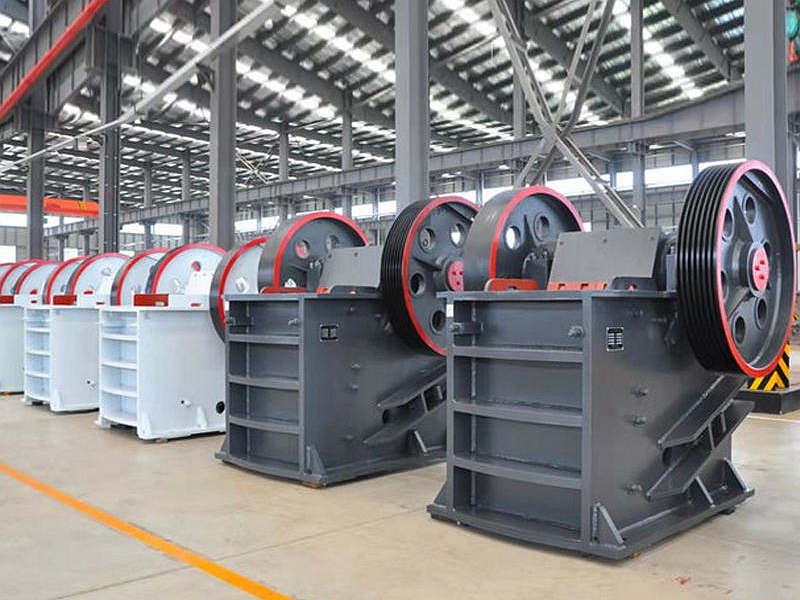
- Small jaw crushers (feed opening 150×250mm – 250×400mm, capacity 1–20t/h): Applied to laboratory sampling, small-scale construction waste disposal, and rural infrastructure projects. They feature small size, light weight, low power consumption, and small castings. The material consumption and processing workload are low, so the price is at the entry level of the full series. XLM controls the cost of small models through standardized design and mass production, ensuring high cost performance while maintaining uniform quality standards.
- Medium jaw crushers (feed opening 400×600mm – 600×900mm, capacity 30–180t/h): This is the mainstream model of XLM Machinery, widely used in limestone quarries, river pebble crushing, and urban construction waste recycling lines. The feed opening is enlarged, requiring thicker frame castings, larger eccentric shafts, heavier flywheels, and higher-power motors. The material consumption increases by 2–3 times compared with small models, and the machining accuracy requirements are stricter, so the price is in the middle range of the full series and has the highest market occupancy.
- Large heavy-duty jaw crushers (feed opening 750×1060mm – 1200×1500mm, capacity 200–600+t/h): Customized for open-pit mining, hard rock (granite, basalt, iron ore) crushing, and large-scale aggregate production bases. The frame adopts integral high-strength cast steel, the eccentric shaft is forged from alloy steel, and the bearing, transmission, and lubrication systems are all upgraded to heavy-duty specifications. The production cycle is long, the material cost is high, and the processing difficulty is greatly increased, so the price is significantly higher than that of medium models. XLM’s large jaw crushers have passed continuous 24-hour heavy-load tests, and their price matches their service life and stability in extreme working conditions.
XLM Machinery never recommends oversized models to customers to earn higher profits, nor does it provide undersized models that affect production efficiency. We conduct on-demand matching according to the customer’s feed particle size, output requirements, and material hardness to ensure that the price corresponds to the actual demand and avoids capital waste.
1.2 Discharge Size Adjustment Range & Crushing Precision
The discharge size adjustment method and range directly affect the crushing effect and post-equipment configuration, which is also an important factor in price differentiation. XLM jaw crushers adopt two adjustment systems: mechanical wedge adjustment and hydraulic automatic adjustment, with obvious cost and price differences.
- Mechanical wedge adjustment: Standard configuration of XLM entry-level models, with simple structure, stable performance, and low maintenance cost. It is suitable for working conditions with fixed discharge size and infrequent adjustments. The cost is low, and the price is more friendly.
- Hydraulic adjustment system: Standard configuration of XLM medium and high-end models, which can realize stepless adjustment of discharge size without stopping the machine, with high precision and fast speed. It is equipped with a hydraulic insurance and hydraulic push-pull function, which can automatically unload when encountering unbreakable materials to protect the equipment. The addition of hydraulic stations, control valves, and sensors increases the manufacturing cost by 10–15%, so the price is higher than that of mechanical adjustment models. For customers with frequent discharge size adjustments and high automation requirements, the hydraulic system can reduce downtime and labor costs, and the full-cycle cost is lower.

1.3 Applicable Material Hardness & Wear Resistance Design
The applicable material hardness determines the structural strength and wear-resistant design of the jaw crusher, which directly affects the material selection and cost. XLM Machinery divides jaw crushers into standard type (for limestone, marble, and other medium-hardness materials) and heavy-duty wear-resistant type (for granite, basalt, river pebble, and ore) according to material abrasiveness.
Heavy-duty wear-resistant models adopt thickened jaw plates, reinforced frame ribs, optimized crushing chamber curve, and higher-grade wear-resistant materials. The structural design can withstand greater impact force and reduce wear speed. The material and processing costs increase by 12–20%, so the price is higher than that of standard models. Customers who crush hard materials must choose heavy-duty models; otherwise, the equipment will wear quickly, have a short service life, and the later operation and maintenance costs will far exceed the initial price difference. XLM will clearly inform customers of the applicable material range of each model and will not sell standard models as heavy-duty models to mislead customers.
2. Material Selection & Casting Craftsmanship: The Quality Cornerstone of XLM Jaw Crusher Price
The price difference of jaw crushers in the market is most reflected in materials and craftsmanship. Low-cost manufacturers use thin steel, recycled castings, and rough machining to reduce prices, while XLM Machinery adheres to high-standard material procurement and precision casting processing, and every cost input is reflected in equipment stability and service life.
2.1 Frame Material: Integral Casting vs. Welding, High-Strength Cast Steel vs. Ordinary Cast Iron
The frame is the load-bearing core of the jaw crusher, bearing huge impact force during crushing. Its material and craftsmanship determine the equipment’s service life and safety.
- XLM standard frame: Adopt HT250 high-strength gray cast iron for small and medium models, with good shock absorption, high rigidity, and not easy to crack. It is produced by XLM’s own casting workshop, with one-piece molding, no welding seams, and stable structure.
- XLM heavy-duty frame: Adopt ZG35CrMo alloy cast steel for large and mining models, with higher tensile strength and impact resistance. It can withstand the impact of large pieces of hard rock, and the frame will not deform or crack after 10 years of heavy-load use. The cost of alloy cast steel is 1.5–2 times that of ordinary cast iron, and the casting and heat treatment processes are more complex, which is an important reason for the high price of heavy-duty models.
Many small manufacturers use welded frames with thin steel plates to reduce costs. The welded seams are easy to crack under long-term impact, and the service life is only 3–5 years, while XLM’s integral casting frame has a service life of up to 15–20 years. The initial price is higher, but the annual average cost is lower.
2.2 Core Moving Parts: Forged Eccentric Shaft & Brand Bearings
The eccentric shaft and bearing are the core moving parts of the jaw crusher, and their quality directly determines the equipment’s operational stability.
- Eccentric shaft: XLM all models adopt 40Cr alloy steel forging eccentric shaft, after precision machining, quenching and tempering, and grinding treatment, with high wear resistance and fatigue resistance. It will not break or deform under continuous heavy-load operation. The cost of forged shafts is 3 times that of ordinary machined shafts, but it can avoid shutdown losses caused by shaft breakage.
- Bearings: XLM only uses international top brand bearings (SKF, NSK, FAG), which have high precision, long service life, and low failure rate. The cost of brand bearings is 2–3 times that of domestic ordinary bearings, but they can operate continuously for more than 50,000 hours without replacement. Low-cost crushers use ordinary bearings, which are prone to heating, damage, and shutdown, affecting production. XLM believes that the cost input of core moving parts is the most worthwhile investment for customers.
2.3 Wear Parts: High-Manganese Steel & Alloy Composite Materials
Jaw plates, side guards, and toggle plates are vulnerable parts of jaw crushers, and their material determines the replacement cycle and operation cost.
XLM’s standard jaw plates adopt Mn13 high-manganese steel, which has good work hardening performance. The surface becomes harder and harder during crushing, and the service life is 30% longer than that of ordinary manganese steel. For hard rock crushing, XLM provides Mn18Cr2 alloy composite jaw plates, with added chromium and molybdenum elements, and the wear resistance is increased by 50–80%. The cost of high-grade wear parts is higher, which will slightly increase the equipment price, but it can reduce the frequency of replacement, labor costs, and downtime losses.
XLM’s own wear parts production workshop can customize wear-resistant parts according to customer materials, ensuring that the wear parts match the working conditions and reducing the customer’s later use cost. The price of XLM jaw crushers includes high-standard wear parts, rather than low-grade vulnerable parts as standard to reduce the quotation.
2.4 Casting & Machining Craftsmanship: Precision Determines Stability
XLM Machinery has a complete casting, machining, and assembly production line, with strict craftsmanship control, which is also an important part of the cost.
- Casting process: Adopt resin sand casting, with high dimensional accuracy, smooth surface, and no trachoma or pores. After annealing and heat treatment, the internal stress of the casting is eliminated to avoid deformation during use.
- Machining process: Adopt CNC machining centers, vertical lathes, and horizontal milling machines for precision machining, with dimensional accuracy controlled within ±0.02mm. The matching clearance of moving parts is more precise, reducing noise and wear during operation.
- Assembly process: Assembled by senior technicians with more than 10 years of experience, and each equipment undergoes 8-hour no-load test run and 4-hour load test run before leaving the factory to ensure that all indicators meet the standards.
The investment in precision craftsmanship increases the production cost, but it ensures the equipment’s stability and reduces the failure rate. Low-cost manufacturers use rough machining and manual assembly, with large dimensional errors, loud noise, and easy damage of parts. The price is low, but the later maintenance cost is huge.
3. Configuration System: Standard & Customized Configurations Directly Affect the Final Price
XLM jaw crushers provide flexible configuration systems, including standard configuration and customized configuration. Customers can choose according to their working conditions, and different configurations correspond to different prices. All configurations are transparent, and there are no hidden charges.
3.1 Power System: Motor Brand & Power
The power system is the power source of the jaw crusher, and the motor brand and power are important factors affecting the price.
- Motor power: Matched strictly according to the model, small models are equipped with 5.5–15kW motors, medium models 30–75kW, and large models 90–160kW. The higher the power, the higher the motor price.
- Motor brand: XLM standard configuration adopts domestic first-line brand motors (Y series, high efficiency and energy saving), and can be upgraded to Siemens, ABB, and other imported motors according to customer needs. Imported motors have higher efficiency, lower energy consumption, and longer service life, but the cost is 1.5–2 times that of domestic motors. Customers can choose according to their budget and use needs.
In addition, XLM can provide diesel engine configurations for customers without power supply on site, suitable for mobile crushing and remote areas. The addition of diesel engines, fuel tanks, and control systems will increase the price by 15–25%, but it solves the power problem.
3.2 Lubrication System: Manual Lubrication vs. Automatic Lubrication
- Manual lubrication: Standard configuration of small models, simple operation and low cost, suitable for low-frequency use.
- Automatic lubrication system: Standard configuration of medium and large models, which can automatically and quantitatively inject lubricating oil into each lubrication point, ensuring sufficient lubrication and reducing wear. It can avoid equipment damage caused by artificial neglected lubrication. The cost of automatic lubrication system is higher, which increases the equipment price by 8–12%, but it reduces maintenance workload and prolongs the service life of parts.
3.3 Control System: Ordinary Control vs. PLC Intelligent Control
- Ordinary control cabinet: Standard configuration, with overload protection, voltage stabilization, and simple operation, suitable for standard working conditions.
- PLC intelligent control system: Optional configuration, with real-time monitoring of current, temperature, lubrication pressure, and automatic shutdown protection for faults. It can realize remote control and data transmission, suitable for automated production lines. The addition of PLC control system increases the price by 10–18%, but it improves the automation level and reduces labor costs.
3.4 Mobile & Stationary Configuration
XLM provides two types of jaw crushers: stationary and mobile, with obvious price differences.
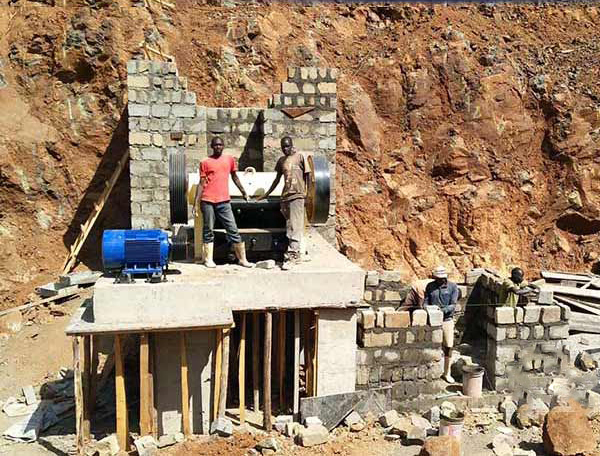
- Stationary jaw crusher: Fixed on the foundation, simple structure, low cost, suitable for long-term fixed production sites. It is the most cost-effective choice for large-scale quarries and mining plants.
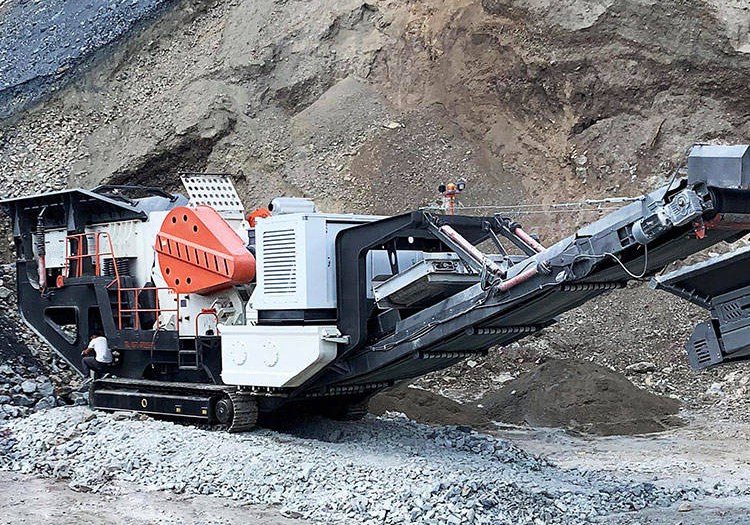
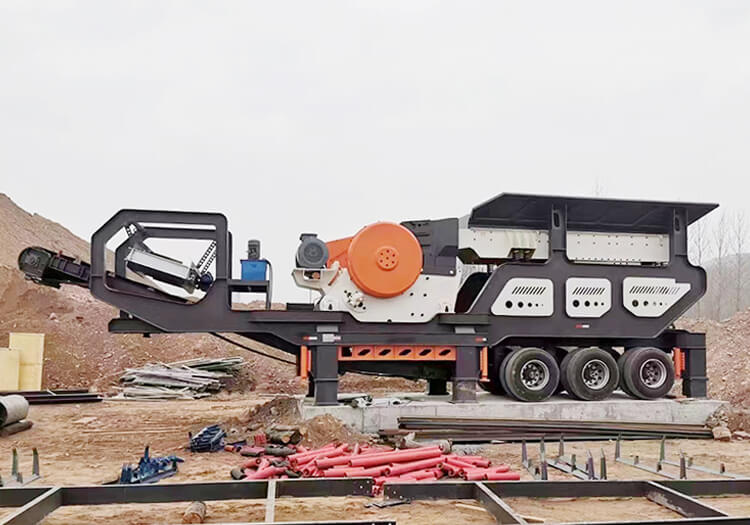
- Mobile jaw crusher: Integrated with feeder, conveyor, and chassis, divided into wheeled and crawler types. It can move freely, no need for foundation construction, and can be put into production immediately after arriving at the site. The mobile chassis, hydraulic system, and integrated control increase the cost by 30–60%, so the price is higher than that of stationary models. It is suitable for multi-site construction, construction waste recycling, and short-term projects.
XLM’s mobile jaw crushers adopt compact design, with stable performance and convenient movement, and have been exported to more than 60 countries and regions, trusted by global customers.
3.5 Customized Configurations
According to customer special working conditions, XLM provides personalized customized services, including:
- High-altitude adaptation: Optimize the power and lubrication system for plateaus above 3000 meters above sea level.
- High-temperature / low-temperature adaptation: Add cooling or heating devices for extreme climate areas.
- Dust removal configuration: Equip with dust covers and dust removal interfaces to meet environmental protection requirements.
- Voltage customization: Adapt to 380V, 415V, 480V, and other national standard voltages.
Each customized configuration requires targeted design and processing, which will increase a certain cost, and the price is adjusted accordingly. XLM’s technical team will communicate with customers in detail to ensure that the customized configuration meets the working conditions and is cost-effective.
4. Production Cost & Supply Chain: The Internal Logic of XLM Jaw Crusher Price
The production cost and supply chain management of the manufacturer directly determine the equipment price. XLM Machinery controls costs through scale production, self-sufficiency of core parts, and optimized supply chain, ensuring that customers get the highest cost performance under the premise of quality.
4.1 Scale Production & Standardization
XLM Machinery has a large-scale production base, with an annual output of more than 800 jaw crushers, realizing standardized and batch production of small and medium models. Scale production reduces the unit cost of materials, machining, and management, and XLM transfers the cost advantage to customers, ensuring that the price is competitive while maintaining quality.
Large and customized models are produced in small batches, with high R&D and processing costs, so the price is slightly higher, but it meets the special needs of customers.
4.2 Self-Sufficiency of Core Parts
XLM has its own casting workshop, machining workshop, wear parts workshop, and assembly workshop. Core parts such as frames, eccentric shafts, jaw plates, and toggle plates are independently produced, reducing the intermediate links of outsourcing procurement and the cost of parts. At the same time, self-production ensures the quality stability of parts and avoids quality problems caused by outsourcing.
For non-core parts such as motors and bearings, XLM establishes long-term strategic cooperation with first-line brands to obtain stable procurement prices and ensure the quality of parts. The optimized supply chain reduces the procurement cost by 5–8%, which is reflected in the equipment price.
4.3 Production Cycle & Labor Cost
The production cycle of jaw crushers is related to the model and configuration: small models are 7–15 days, medium models 15–30 days, and large customized models 30–45 days. Longer production cycle means more labor input, equipment depreciation, and management costs, which are included in the equipment price.
XLM adopts refined production management, shortens the production cycle through process optimization, reduces invalid labor costs, and ensures that the price is not increased due to inefficient production.
4.4 Quality Inspection Cost
XLM implements full-process quality inspection, including raw material inspection, casting inspection, machining inspection, assembly inspection, and factory test run inspection. Each equipment has a complete quality inspection report, and unqualified products are never allowed to leave the factory. The input of quality inspection personnel, testing equipment, and inspection processes increases the production cost, but it ensures that customers receive qualified equipment.
Low-cost manufacturers omit quality inspection links to reduce costs, and the equipment is prone to failures after leaving the factory, resulting in greater losses for customers. XLM believes that quality inspection is an essential cost, which is the guarantee of customer rights and interests.
5. Market & Logistics Factors: External Influences on Jaw Crusher Price
In addition to internal production factors, market supply and demand, raw material prices, logistics and transportation, and tariffs also affect the final price of jaw crushers. XLM Machinery transparently informs customers of these external factors and helps customers reduce costs through optimized logistics.
5.1 Fluctuation of Raw Material Prices
The main raw materials of jaw crushers are cast iron, alloy steel, copper, and aluminum. The price fluctuation of bulk commodities will affect the production cost. When the price of steel rises, the equipment price will be adjusted appropriately; when the steel price falls, XLM will reduce the sales price in a timely manner. XLM signs long-term raw material procurement contracts to stabilize costs and avoid large price fluctuations caused by short-term raw material jumps.
5.2 Market Supply & Demand Relationship
In the peak season of infrastructure and mining (such as spring and autumn), the order volume increases, and the production capacity is tight. The delivery cycle is slightly longer, but XLM does not increase prices due to peak demand. In the off-season, XLM provides appropriate preferential policies to help customers reduce investment costs. XLM always adheres to stable pricing and does not follow the market to raise prices arbitrarily.
5.3 Logistics & Transportation Cost
Jaw crushers are large mechanical equipment, and logistics costs account for a certain proportion of the total price. The transportation distance, transportation method (sea, land, air), and packaging method all affect the logistics cost.
XLM Machinery has a professional logistics team, which cooperates with international freight forwarders to optimize transportation routes and packaging methods, reduce logistics costs. For customers in different regions, XLM provides FOB, CIF, CNF, and other trade terms, and transparently calculates logistics costs without adding intermediate fees.
Small models are packed in wooden cases, medium and large models are shipped in nude or containerized, which reduces packaging costs. For customers in neighboring countries, land transportation is adopted; for distant countries, sea transportation is adopted, which is the most cost-effective transportation method.
5.4 Tariffs & Customs Clearance
For exported jaw crushers, tariffs and customs clearance fees of the importing country are additional costs, which are borne by the customer (or negotiated according to trade terms). XLM provides complete customs clearance documents, product certificates, and origin certificates to help customers complete customs clearance quickly and reduce customs clearance costs.
XLM’s products have passed CE, ISO, and other international certifications, which are suitable for customs clearance and use in most countries and regions, avoiding additional costs caused by non-compliance.
6. After-Sales Service & Full-Cycle Value: The Hidden Part of XLM Jaw Crusher Price
Many customers only pay attention to the initial purchase price when buying a jaw crusher, ignoring the after-sales service and full-cycle value. The price of XLM jaw crushers includes comprehensive after-sales service, which is the guarantee of customers' later use.
6.1 Warranty Service
XLM provides a 12-month standard warranty for all jaw crushers (except vulnerable parts). During the warranty period, if there is a non-human quality problem, XLM provides free parts replacement and maintenance services. For large customers and long-term partners, the warranty period can be extended.
Low-cost manufacturers provide short warranty periods or no warranty, and customers have to bear high maintenance costs after equipment failure. XLM’s warranty service reduces the customer’s later risk, and the cost of warranty service is included in the equipment price.
6.2 Technical Support & Training
XLM provides free on-site installation, commissioning, and operator training services for global customers. Professional technical engineers guide the installation and commissioning to ensure the normal operation of the equipment. At the same time, they train the customer’s operators to master the operation, maintenance, and troubleshooting skills of the equipment.
For overseas customers, XLM provides remote video guidance, 24-hour online technical support, and timely response to customer problems. The input of technical support personnel and training services increases the cost, but it ensures that customers can use the equipment correctly.
6.3 Spare Parts Supply
XLM has a global spare parts warehouse, which can quickly supply vulnerable parts and core parts to ensure that customers can get parts replacement in the shortest time and reduce downtime losses. The spare parts are sold at factory direct sales prices, without middleman price increases.
6.4 Full-Cycle Value
The price of XLM jaw crushers is not only the equipment itself, but also includes full-cycle value: long service life, low failure rate, low energy consumption, low maintenance cost, and high ROI. According to customer feedback, XLM jaw crushers have a 20% lower energy consumption and 30% lower maintenance cost than ordinary crushers, and the investment can be recovered 1–2 years in advance.
When customers compare prices, they should not only look at the initial purchase price, but also calculate the full-cycle cost. XLM’s seemingly higher price is actually lower full-cycle cost, which is the real cost-effective choice.
7. XLM Machinery vs. Low-Cost Manufacturers: Why the Price Is Different?
To help customers understand the price difference more clearly, we compare XLM jaw crushers with low-cost manufacturers in the market:
| Comparison Item | XLM Machinery | Low-Cost Manufacturers |
|---|---|---|
| Frame Material | Integral cast steel / high-strength cast iron, no welding seams | Thin steel plate welding, easy to crack |
| Core Parts | Forged eccentric shaft + international brand bearings | Ordinary machined shaft + domestic low-grade bearings |
| Wear Parts | Mn13 / Mn18Cr2 high-manganese steel, long service life | Ordinary manganese steel, short service life |
| Craftsmanship | CNC precision machining, full-process inspection | Rough machining, no strict inspection |
| Configuration | Standard high configuration, optional intelligent system | Low configuration, no upgrade options |
| After-Sales | 12-month warranty, free training, global spare parts | Short warranty or no warranty, no after-sales |
| Service Life | 15–20 years | 3–5 years |
| Price | Medium and high, matching quality and value | Low, but high later cost |
It can be seen that the low price of low-cost manufacturers is at the expense of quality, configuration, and after-sales. Customers will face frequent failures, high maintenance costs, and short service life after purchase. XLM Machinery adheres to quality first, and the price corresponds to the product value, bringing long-term benefits to customers.
8. How to Choose the Right XLM Jaw Crusher According to Budget & Working Conditions?
Combined with the above cost factors, XLM Machinery provides the following purchasing suggestions for global customers to help you choose the right model and configuration and get the best price:
- Clarify core parameters: Determine the feed particle size, hourly output, material hardness, and discharge size, and choose the corresponding model to avoid overcapacity or insufficient capacity.
- Choose configuration on demand: For standard working conditions, choose standard configuration; for hard rock, automation, and mobile needs, choose heavy-duty, intelligent, or mobile configuration.
- Consider full-cycle cost: Don’t only pursue low initial price; pay attention to energy consumption, wear parts cost, and after-sales service. XLM’s high-standard models have lower full-cycle cost.
- Communicate with professional teams: XLM’s sales and technical teams will provide free scheme design, quotation, and parameter matching according to your working conditions, ensuring that you get the most suitable equipment.
- Choose factory direct sales: XLM sells directly to customers without middlemen, eliminating intermediate price increases and ensuring that customers get factory direct sales prices.
Conclusion: Jaw Crusher Price Is the External Presentation of XLM’s Product Strength & Service Value
In summary, the price of a jaw crusher is determined by a combination of technical specifications, material selection, craftsmanship, configuration, production cost, logistics, and after-sales service. Every penny of the price of XLM jaw crushers corresponds to tangible quality input and value output. We never cut corners on materials, never reduce craftsmanship standards, never omit after-sales service, and never make false quotations.
For XLM Machinery, the jaw crusher price is not just a number, but a commitment to customers: to provide stable, efficient, and long-life crushing equipment, to reduce customers' full-cycle operation costs, and to help customers achieve high returns on investment. In the global crushing equipment market, XLM Machinery always takes "quality first, customer-centric" as the core concept, and uses transparent cost logic and professional technical services to win the trust of global customers.
If you need to know the specific quotation of XLM jaw crushers, or need customized scheme design, please contact our global sales team at any time. We will provide you with accurate, transparent, and cost-effective solutions based on your actual working conditions, and help you make a wise purchasing decision.
XLM Machinery – Professional Jaw Crusher Manufacturer, Creating Long-Term Value for Global Customers.
Mobile Crusher vs Stationary Crusher: Which Is Better?
How Does a Jaw Crusher Work? Complete Working Principle