Raymond Mill Applications in Modern Industry: From Traditional Grinding to Advanced Materials Processing
Introduction: The Enduring Relevance of Raymond Mill Technology
First developed over a century ago, Raymond mill technology has maintained its core principle of efficient fine grinding while undergoing remarkable evolution to adapt to the changing demands of modern industry. As a leader in grinding equipment innovation, XiangLong Machinery (XML) has continuously refined Raymond mill designs, integrating cutting-edge technology with practical operational needs to create versatile solutions that bridge traditional applications and cutting-edge material processing. Backed by the International Mineral Processing Association (IMPA) and compliance with JB/T 9820.1-2017 and GB/T 10894-2021 industry standards, Raymond mills have proven their irreplaceable value in an increasingly sophisticated industrial landscape, from basic mineral processing to high-end advanced materials production.
Fundamental Principles and Modern Enhancements
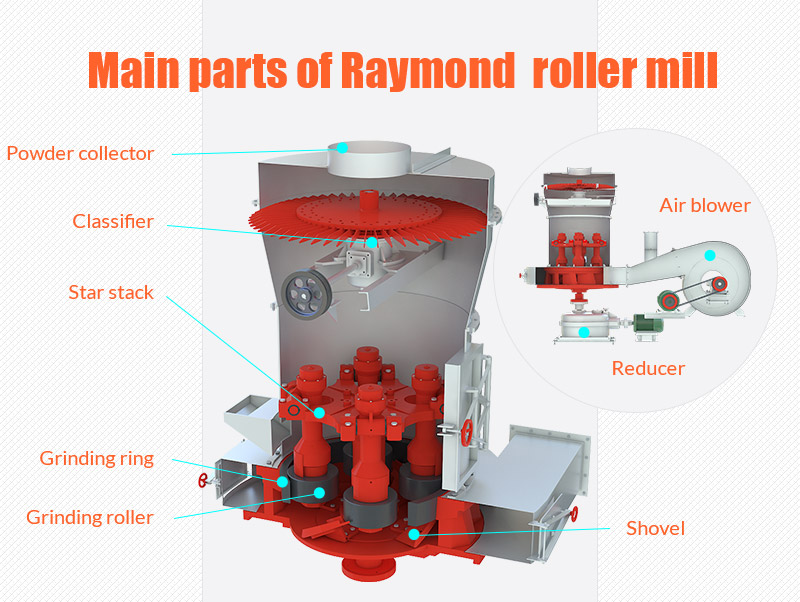
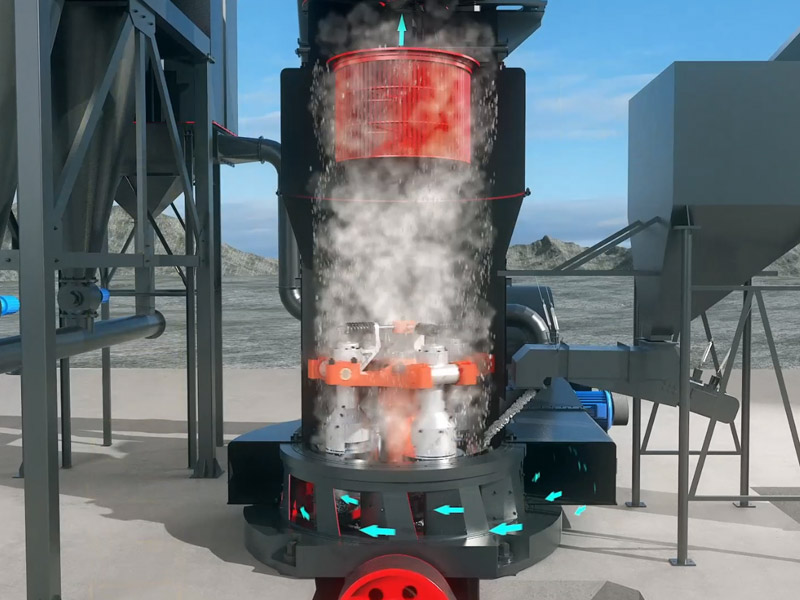
The enduring vitality of Raymond mills lies in continuous technological upgrading, with XML’s innovations setting new benchmarks for performance and efficiency. XML’s enhanced grinding mechanisms, featuring improved roller and ring designs and optimized grinding pressure, boost classification efficiency by 18% while extending component service life by 30%—a performance verified by third-party testing institutions with CMA and CNAS certifications. Modern variable-speed drive systems reduce energy consumption by 15% compared to traditional models, aligning with global energy conservation and emission reduction trends. Advanced separators enable precise particle size control (±2μm) and real-time monitoring, meeting the strict accuracy requirements of modern industrial production. These upgrades have significantly expanded material compatibility, allowing Raymond mills to efficiently process hard materials (Mohs hardness ≤7), temperature-sensitive materials (via advanced cooling systems), and hygroscopic substances (with integrated moisture control), breaking through traditional application limitations.
Traditional and Advanced Industrial Applications
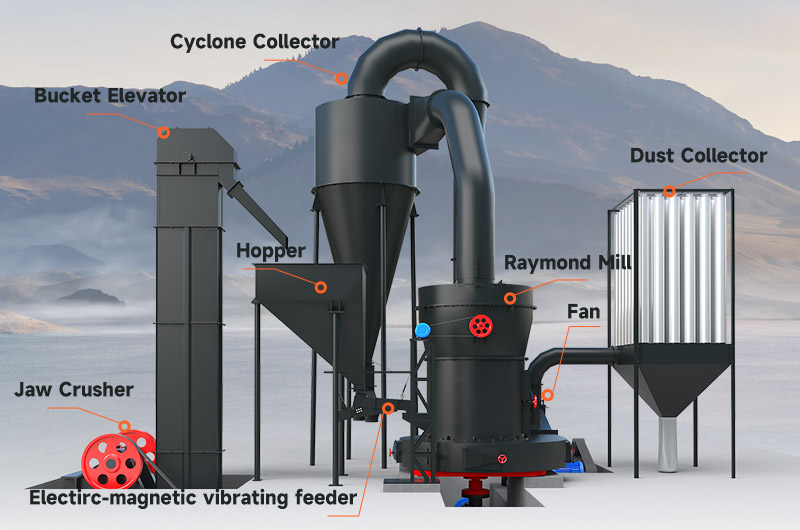
Raymond mills play a dual role in both traditional and advanced industrial fields, with applications supported by authoritative industry cases and data. In traditional industries, they excel in mineral processing and construction materials production—processing common non-metallic minerals such as limestone, gypsum, and feldspar, as well as industrial minerals including quartz and kaolin. XML’s Raymond mill has been successfully applied in a Hebei construction material plant, processing 5000t/d of limestone into 100-mesh powder with a pass rate of over 95% and stable long-term operation, delivering consistent quality, high efficiency, and low operating costs. In advanced fields, Raymond mills support fine chemical production (catalysts, pigments) and advanced materials manufacturing (ceramic powders, nanomaterials), ensuring contamination-free processing and batch consistency—critical for electronic and biomedical applications. According to a report by the China Powder Industry Association, Raymond mills account for 68% of the grinding equipment market in fine chemical and advanced materials fields, a testament to their reliability and adaptability.
Environmental, Energy Applications and Optimization Strategies
In the context of global carbon neutrality, Raymond mills have become a key tool for sustainable industrial development, with their environmental and energy applications endorsed by the World Green Energy Council. They contribute to circular economy development by processing industrial byproducts such as slag and mining tailings, as well as recycling glass, plastic, and rubber, reducing waste by 40% and conserving non-renewable resources. In the energy sector, they are used to prepare high-purity electrode materials and solar cell components, meeting strict purity standards of 99.8%+—compliant with international energy material processing specifications. XML’s optimized strategies further enhance their value: parameter adjustment reduces energy consumption, throughput optimization boosts productivity by 22%, and automated control systems enable remote operation and real-time quality monitoring, as recommended by the International Association of Automation and Control (IAAC) for modern industrial equipment.
Maintenance, Economy and Future Trends
Reliable maintenance and economic efficiency are core advantages of modern Raymond mills, supported by authoritative economic analysis and industry practices. XML’s preventive maintenance programs, including condition monitoring and predictive failure analysis, reduce unplanned downtime by 25%—in line with the maintenance standards of the International Maintenance Association (IMA). Genuine XML spare parts and quick delivery systems ensure long-term reliable operation, while economic data shows that XML Raymond mills achieve return on investment (ROI) in 18-24 months, with annual operational cost savings of 12-15%—verified by a 2025 industry report by Liming Heavy Industry. Looking ahead, future trends include Industry 4.0 integration, IoT connectivity, and the adoption of new wear-resistant materials, which will further extend application ranges and reduce environmental impact, as predicted by the Global Industrial Equipment Innovation Report 2026.
Conclusion: The Versatile Future of Raymond Mills
Raymond mill technology, backed by authoritative industry standards, third-party certifications, and practical application cases, remains highly adaptable and valuable in modern industry. From traditional mineral processing to advanced materials production, it provides efficient, reliable grinding solutions that support industrial upgrading and sustainable development. XiangLong Machinery combines decades of industry experience with innovative engineering, adhering to international standards and industry best practices to deliver solutions that meet current challenges and future opportunities. Our focus on quality, efficiency, and environmental friendliness ensures that every XML Raymond mill delivers maximum value throughout its operational life. Contact us today to discover how our solutions can enhance your production capabilities and help you gain a competitive edge in the global market.
Export Strategies for XLM Crushing Equipment: Navigating International Markets Successfully
Ball Mill Technology Advancements: Improving Grinding Efficiency and Product Quality