Comprehensive Guide to Jaw Crusher Maintenance: Maximizing Equipment Lifespan
Introduction: The Critical Role of Proper Maintenance
Jaw crushers represent significant investments for any operation, and their performance directly impacts productivity and profitability. At XiangLong Machinery, we understand that proper maintenance isn't just about preventing breakdowns—it's about maximizing return on investment through extended equipment life and optimal performance. This comprehensive guide draws on XML's decades of experience in crusher manufacturing and maintenance to provide practical, actionable advice for jaw crusher operators and maintenance teams; whether you're running our latest models or maintaining older equipment, these principles will help you achieve better results and lower operating costs.
Understanding Jaw Crusher Wear Patterns
Normal Wear vs. Premature Failure
Proper maintenance begins with understanding how jaw crushers wear under normal operating conditions: normal wear is characterized by even wear across jaw plates, gradual reduction in crushing capacity, predictable service intervals, and consistent product size distribution, while signs of premature failure include uneven or localized wear patterns, sudden changes in product size, unusual vibrations or noises, and excessive power consumption.
Common Wear Components and Their Lifespan
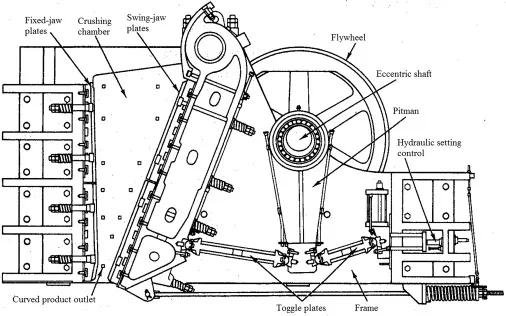
The main wear components of jaw crushers include jaw plates, toggle plates, bearings, and liners: jaw plates are the primary wear components, typically lasting 500-1,000 operating hours; toggle plates are critical safety components with a variable lifespan; properly maintained bearings can last 5,000+ hours; and liners are used to protect the crusher frame from wear and impact.
Preventive Maintenance Schedule
Daily Maintenance Tasks
Daily maintenance tasks include before-operation, during-operation, and after-operation checks: before operation, conduct a visual inspection of all components, check lubrication levels and systems, verify belt tension and condition, and inspect fasteners and safety devices; during operation, monitor operating temperatures, listen for unusual sounds, observe material flow and crushing action, and check product size consistency; after operation, clean equipment thoroughly, document any issues observed, schedule necessary repairs, and update maintenance records.
Weekly Maintenance Procedures
Weekly maintenance procedures include comprehensive lubrication checks, wear component inspections, and safety system verification: for lubrication checks, verify grease quality and quantity, check for contamination, inspect lubrication system components, and document lubrication points serviced; for wear component inspections, measure jaw plate thickness, check toggle plate condition, inspect frame liners, and evaluate bearing play; for safety system verification, test emergency stop functions, verify guarding integrity, check warning systems, and review safety documentation.
Monthly Maintenance Activities
Monthly maintenance activities include detailed component inspections, performance testing, and preventive replacement planning: detailed component inspections involve complete disassembly and inspection of key components, measurement of critical tolerances, evaluation of structural integrity, and documentation of wear patterns; performance testing includes capacity verification, product size analysis, power consumption measurement, and efficiency calculations; preventive replacement planning requires ordering wear parts before critical failure, scheduling downtime for major maintenance, planning for seasonal maintenance activities, and updating maintenance budget projections.
Advanced Maintenance Techniques
Predictive Maintenance Strategies
XML recommends implementing predictive maintenance programs that utilize vibration analysis, thermal imaging, and oil analysis: vibration analysis enables early detection of bearing issues, identification of imbalance problems, monitoring of structural integrity, and prediction of component failure; thermal imaging helps detect overheating components, identify lubrication issues, monitor electrical systems, and prevent thermal-related failures; oil analysis allows early detection of contamination, monitoring of component wear, identification of lubrication issues, and prediction of system failures.
Condition-Based Monitoring
Modern jaw crushers from XiangLong Machinery feature integrated monitoring systems that provide real-time performance data, wear component tracking, efficiency metrics, maintenance alerts, and historical performance analysis to facilitate timely and effective maintenance.
Common Maintenance Challenges and Solutions
Problem: Premature Jaw Plate Wear
Premature jaw plate wear is usually caused by incorrect feed material, improper crusher settings, inadequate maintenance, and poor quality wear parts; the solutions include using XML genuine wear parts, optimizing feed size and distribution, conducting regular inspection and rotation, and following proper installation procedures.
Problem: Excessive Vibration
Excessive vibration is often caused by unbalanced rotating components, worn bearings, loose fasteners, and foundation issues; the solutions involve regular balancing checks, timely bearing replacement, following proper torque procedures, and inspecting and repairing the foundation.
Problem: Reduced Capacity
Reduced capacity can be attributed to worn jaw plates, incorrect speed settings, feed distribution issues, and blocked discharge areas; the solutions include regular wear part replacement, optimization of operating parameters, proper feed arrangement, and regular cleaning and inspection.
XML Maintenance Support Services
Genuine Parts Program
XiangLong Machinery offers a comprehensive genuine parts program featuring quality assurance, availability, technical support, and warranty coverage: all parts are manufactured to original specifications, a global distribution network ensures timely delivery, expert advice is provided on part selection and installation, and comprehensive protection is offered for genuine parts.
Technical Training Programs
XML provides extensive training programs covering basic maintenance procedures, advanced troubleshooting techniques, safety protocols and procedures, efficiency optimization strategies, and record keeping and documentation to enhance the professional capabilities of operators and maintenance teams.
Remote Support Services
Our global support network offers 24/7 technical assistance, remote diagnostics capabilities, online parts ordering, maintenance scheduling support, and performance optimization advice to provide timely and convenient support for customers worldwide.
Economic Benefits of Proper Maintenance
Cost Reduction Analysis
Proper maintenance delivers significant economic benefits: it can reduce unplanned downtime by 40-60%, extend equipment life by 30-50%, lower major repair expenses by 25-40%, improve equipment efficiency by 15-25%, and increase equipment value through well-documented maintenance history.
Return on Investment Calculation
Investing in proper maintenance typically delivers a 3:1 to 5:1 return on maintenance investment, with a payback period of 6-12 months, along with ongoing operational cost savings and reduced capital expenditure requirements.
Conclusion: Building a Maintenance Culture
Effective jaw crusher maintenance requires more than just following procedures—it requires building a culture of care and attention to detail. At XiangLong Machinery, we believe that maintenance is an investment in productivity, safety, and profitability. By implementing the strategies outlined in this guide and leveraging XML's support services, you can maximize the performance and lifespan of your crushing equipment. Remember: the most expensive maintenance is the maintenance you don't do. Contact XiangLong Machinery today to learn more about our maintenance programs, genuine parts, and support services. Let us help you build a maintenance strategy that delivers real results.
The Complete Guide to Aggregate Production Line Configuration and Optimization